If you want a small 3D printer for home, the best models are compact, easy to set up, and forgiving for first-time users.
This roundup focuses on printers that fit small spaces without giving up the core features most buyers need: auto leveling, simple controls, and dependable print quality.
Best 10 Small 3d Printer for Home Picks for 2026
Beginner-Friendly Creative Pick
Bambu Lab A1 mini + LED Lamp Kit
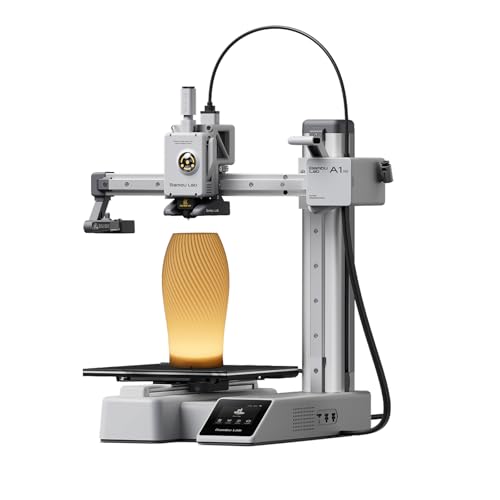
- Full-auto calibration and flow compensation
- Quiet compact design for home use
- Includes LED Lamp Kit and model library access
Best For: Beginners making decorative and functional home projects
High-Speed Home Workshop Choice

- One-click automatic printing with auto leveling
- Up to 600mm/s travel speed on CoreXY system
- Fast nozzle swaps and app-based monitoring
Best For: Fast home printing and rapid prototyping
Ultra-Compact Starter Pick

- Tiny 100x100x100mm build volume
- PLA and TPU filament support
- Video-guided setup with starter kit included
Best For: Very small spaces and beginner projects
Quiet WiFi Family Pick

- Fully assembled with auto leveling
- WiFi cloud printing and app model library
- Quiet compact design for home and school
Best For: Families and beginners who want easy wireless printing
Easy Starter Mini
Fully Assembled Kids & Beginner Printer

- Fully assembled for immediate use
- Auto leveling and flexible magnetic plate
- Includes filament, SD card, and model files
Best For: Beginners and families wanting a simple home starter printer
Smart Learning Mini
App-Controlled Home STEM Printer

- Starts in as fast as 8 minutes
- WiFi, TF card, and app-based control
- STEM modules and AI creative tools
Best For: Families and beginners looking for an educational home 3D printer
Beginner-Friendly Creative Pick – Bambu Lab A1 mini + LED Lamp Kit
If you want a small 3d printer for home use that feels easy from the first setup, the Bambu Lab A1 mini is built around automation and convenience. It includes full-auto calibration, active flow rate compensation, and access to MakerWorld and the Bambu Handy app, so you can spend more time printing and less time adjusting settings.
Best For: Beginners who want a compact, quiet printer for creative home projects and decorative lamp builds.
Pros:
- Automatic calibration and active flow rate compensation simplify everyday printing.
- Compact, quiet operation is a good fit for homes, studios, or shared workspaces.
- Includes an LED Lamp Kit for functional décor and gift-making projects.
- Connected Bambu ecosystem offers a large model library and app-based control.
Cons:
- Compact size is better suited to smaller projects than larger builds.
- Best value depends on whether you will use the included lamp kit.
Overall, the A1 mini stands out for buyers who want a low-friction start and a polished printing experience at home. It is especially appealing if you value guided workflows, quiet operation, and ready-made creative ideas.
High-Speed Home Workshop Choice – FLASHFORGE Adventurer 5M
For shoppers who want a small 3d printer for home that can also move quickly, the FLASHFORGE Adventurer 5M focuses on speed and automation. It offers one-click automatic printing, automatic bed leveling, and a CoreXY structure with up to 600mm/s travel speed, making it a strong fit for fast turnaround projects.
Best For: Users who want rapid, high-quality printing with minimal manual setup.
Pros:
- Automatic bed leveling helps deliver reliable first layers without manual tuning.
- Very fast printing with CoreXY motion and up to 600mm/s travel speed.
- Quick 3-second nozzle changes and fast warm-up support efficient workflows.
- Remote monitoring through the Flash Maker app adds convenience.
Cons:
- Heavier than some other compact printers in this roundup.
- Best suited to users who will benefit from its speed-focused feature set.
In practical terms, the Adventurer 5M is a strong pick if you want home printing that feels quick and efficient. Its combination of auto-leveling, remote monitoring, and high-speed motion makes it a capable everyday machine.
Ultra-Compact Starter Pick – Portable Mini FDM Printer
If you need a small 3d printer for home use in a tight space, this portable FDM model keeps the footprint tiny while still covering the basics. It comes with a removable build plate, PLA and TPU compatibility, and video-guided setup, which makes it appealing for simple projects and first-time users.
Best For: Small-space buyers, students, and beginners who want a very compact starter printer.
Pros:
- Extremely compact 100x100x100mm build volume for small desks and rooms.
- Supports both PLA and flexible TPU for simple creative projects.
- Video guides and included starter items reduce setup friction.
- Removable build plate makes part removal easier.
Cons:
- Very small build volume limits print size.
- Assembly is still required, even with the guided setup.
As a budget-friendly small-format option, this printer is most useful when space matters more than print capacity. It is a practical entry point for learning the basics, making small models, and testing ideas at home.
Quiet WiFi Family Pick – Entina TINA2S Mini 3D Printer
For anyone looking for a small 3d printer for home, office, or school, the Entina TINA2S is designed to be simple from the start. It arrives fully assembled with auto leveling, WiFi cloud printing, and app access to a large model library, so beginners can go from unboxing to printing with minimal effort.
Best For: Families, beginners, and students who want a quiet, compact printer with easy wireless printing.
Pros:
- Fully assembled with no setup or calibration required.
- WiFi cloud printing and app support make file transfer simple.
- Auto leveling and a flexible build plate help improve first-layer consistency and removal.
- Quiet operation suits bedrooms, classrooms, and study spaces.
Cons:
- Small print volume limits larger projects.
- Best for simple home and learning use rather than heavy production.
The TINA2S is a strong fit if you want a beginner-friendly printer that minimizes setup and keeps noise low. Its compact design and wireless workflow make it especially practical for shared home environments.
Easy Starter Mini – Fully Assembled Kids & Beginner Printer
If you want a small 3d printer for home use that keeps setup simple, this fully assembled mini model is built for beginners. It ships with starter filament, a microSD card, and included model designs, so you can get printing without piecing together extra accessories.
Best For: Kids, beginners, dorm rooms, and home users who want an out-of-the-box starter printer with auto leveling.
Pros:
- Fully assembled and designed for reliable use right out of the box
- Compact 8.3″ x 8.3″ x 11.4″ footprint fits small spaces
- Auto leveling, dual Z-axis rail, and flexible magnetic build plate
- One-touch filament loading plus pause and resume controls
Cons:
- Small build size limits larger projects
- Works with the included magnetic plate or comparable metal plate only
Overall, this is a practical pick if you value convenience over advanced tinkering. It focuses on straightforward operation, compact sizing, and beginner-friendly features that make home printing less intimidating.
Speed-Focused Mini – Fully Assembled High-Speed Beginner Printer
This small 3d printer for home use is aimed at beginners who want a compact machine with quicker print turnaround. It arrives fully assembled, supports auto leveling, and includes a direct drive extruder designed to improve extrusion force and printing accuracy.
Best For: Beginners, school projects, and home makers who want a compact printer with higher print speed and strong TPU/PLA handling.
Pros:
- Fully assembled and easy to operate out of the box
- Up to 250mm/s printing speed for faster jobs
- Direct drive extruder with strong torque for TPU/PLA
- 16-point auto leveling and removable magnetic build plate
Cons:
- Smaller print area limits bigger models
- Some specs may require checking the provided filament holder details for larger spools
This model is a sensible choice if speed and ease of use matter more than a large build volume. Its beginner-friendly controls and auto leveling make it a straightforward home option for smaller prints and classroom-style projects.
Smart Learning Mini – App-Controlled Home STEM Printer
If you are shopping for a small 3d printer for home that leans into guided learning, this mini model stands out for its app-based setup and creative tools. It starts in as fast as 8 minutes, supports WiFi and offline printing, and adds STEM-focused features for family projects.
Best For: Families, kids, and first-time users who want a compact printer with app control, guided setup, and educational extras.
Pros:
- Fast guided setup with printing in as fast as 8 minutes
- App features include AI search, photo-to-print, and 20+ creative modules
- WiFi and TF card offline printing options
- Compact body with low-noise operation and rounded edges for home use
Cons:
- 3.9″ x 3.9″ x 3.9″ print volume is very small
- Designed more for simple creative builds than larger projects
For households that want an approachable, educational printer, this one balances ease, safety-minded design, and app features well. Its compact footprint and beginner workflow make it a strong fit for home learning rather than heavy-duty printing.
Ready-to-Print Beginner Pick – Entina Tina2 Basic Mini 3D Printer
If you want a small 3d printer for home that feels simple from day one, the Entina Tina2 Basic is built around fast setup and low-friction printing. It arrives fully assembled, supports auto leveling, and includes a TF card with test models and slicing software so you can start in about 5 minutes.
Best For: Beginners, kids, and home users who want an easy first printer with minimal setup.
Pros:
- Fully assembled and ready to print out of the box
- Auto leveling plus a removable magnetic build plate
- Compact 8.3″ x 8.3″ x 11.4″ footprint for desks and small spaces
- Resume printing after unexpected power outages
Cons:
- Small build volume at 100 x 105 x 100 mm
- Best suited to simple models and beginner projects
This is a practical choice if ease of use matters more than advanced features. Its open-source compatibility, dual Z-axis rails, and portable size make it a friendly home starter machine rather than a high-capacity workhorse.
Fast WiFi STEM Option – Entina Tina2 Plus Mini 3D Printer
The Entina Tina2 Plus is a small 3d printer for home users who want quicker prints and a little more convenience. It comes fully assembled, supports auto leveling, and pairs with a WiFi app that offers access to over 1,500 printable models for easy beginner-friendly use.
Best For: Families, students, and beginners who want WiFi control and faster print speeds in a compact printer.
Pros:
- Fully assembled and ready to print in minutes
- Up to 250 mm/s print speed for faster projects
- WiFi app support with 1,500+ printable models
- 40-second ceramic hotend heating for quicker start-up
Cons:
- Still a compact printer, so it is better for small models than large builds
- WiFi/app features may be more than casual users need
For a home setup where speed and convenience matter, this model adds useful extras without giving up the beginner-friendly approach. The PEI build plate, dual Z-axis structure, and compact footprint make it a solid all-around pick for desk or classroom use.
Starter Kit Value Choice – Fully Assembled Mini 3D Printer Kit
This small 3d printer for home is aimed at people who want a complete starter setup instead of buying accessories separately. It arrives fully assembled, includes a roll of test PLA filament and an SD card, and adds one-button auto-leveling plus one-touch filament loading to keep the first prints simple.
Best For: Beginners and families who want an all-in-one starter kit with useful accessories included.
Pros:
- Fully assembled with included filament, SD card, and accessories
- 250 mm/s top speed with 0.01 mm precision claimed
- Auto nozzle cleaning, auto leveling, and one-touch filament loading
- PEI heated bed for easier model removal
Cons:
- Smaller printer format may limit larger projects
- 1kg filament use requires a compatible holder and pre-sliced file
If you want the easiest path into printing at home, this bundle reduces the number of extra purchases and setup steps. The included support terms also add peace of mind for a first machine, especially for beginners and school use.
How We Picked the Best Small 3d Printer for Home
We prioritized printers that are genuinely practical for home use: compact footprints, beginner-friendly setup, auto leveling, and enough reliability to handle everyday prints without constant tuning. We also weighed speed, filament compatibility, safety features, and overall value.
Quick Comparison
In this group, some models are better for absolute beginners, while others are better if you want faster printing or a more polished ecosystem. A Small 3d Printer for Home should match your space, your patience level, and the type of projects you plan to make.
Key Buying Factors for a Small 3d Printer for Home
Build Size Vs. Desk Space
Smaller printers are easier to place in an office, bedroom, or hobby corner, but the build volume matters if you want to print larger toys, organizers, or functional parts. Make sure the printer can handle the size of your typical projects.
Setup and Calibration
Auto leveling, preassembled frames, and guided apps make a big difference for beginners. If you are buying a Small 3d Printer for Home use, easy setup often matters more than raw specs.
Material Support
Most home users will print PLA first, but TPU compatibility adds flexibility for soft or flexible parts. Higher nozzle temperatures and stronger extruders can broaden what you can print later.
Speed, Noise, and Reliability
Fast printers save time, but only if they stay consistent. Quiet operation can also matter a lot in apartments or shared spaces. Look for a balance of speed, stability, and low-maintenance operation.
Software and Ecosystem
Easy slicing software, app control, and model libraries can shorten the learning curve. A polished ecosystem is especially helpful if you want fewer setup headaches.
Who Should Buy Which Small 3d Printer for Home?
If you are a first-time buyer, choose the most beginner-friendly option with auto leveling and a strong software ecosystem. If you want a Small 3d Printer for Home projects that finish quickly, prioritize higher print speeds and stable motion systems. If you are shopping for kids or casual family use, focus on fully assembled kits, safety-minded design, and simple controls. If you already have some experience, a more open and upgrade-friendly model may give you better long-term flexibility.
For most buyers, the best choice is the printer that fits your space, matches your skill level, and supports the materials you actually plan to use. That combination matters more than any single spec.