Choosing a compact 3D printer for beginners is mostly about reducing frustration: easier setup, reliable auto leveling, and a size that fits your desk or classroom.
The best models balance convenience, print quality, and safety features without adding a steep learning curve.
Best 10 Compact 3d Printer for Beginners Picks for 2026
Beginner-Friendly Creative Kit
Bambu Lab A1 mini LED Lamp Kit

- Automatic calibration for easier setup
- Quiet operation for home-friendly use
- LED lamp kit adds creative project options
Best For: Beginners who want a quiet, compact printer for creative DIY projects
Ultra-Compact Starter Printer

- Fully assembled with one-touch controls
- Tiny footprint for desks and shelves
- Supports TPU plus standard filament
Best For: Beginners and students who need a very small printer for simple projects
Portable Beginner Pick
Compact FDM Printer with Video Setup

- Video guides help make setup easier
- Includes filament, TF card, tools, and adapter
- PLA and TPU compatibility adds flexibility
Best For: Beginners who want a guided, small printer with a complete starter bundle
Connected Mini Option
Entina TINA2S WiFi Beginner Printer

- Fully assembled with no calibration needed
- WiFi cloud printing plus app support
- Auto leveling and flexible build plate
Best For: Beginners, kids, and classrooms that want easy, connected printing
Mini Starter Pick
TINA2 Mini 3D Printer for Beginners
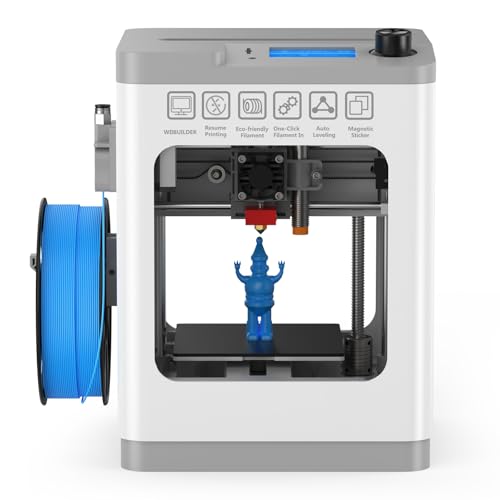
- Fully assembled with sample filament and model files
- One-touch auto leveling for easier first prints
- Compact, lightweight desktop design
Best For: Beginners and kids who want a simple space-saving starter printer
All-in-One Starter Kit

- Includes filament, SD card, and starter accessories
- Fully assembled with auto leveling and one-touch loading
- WiFi support with Mac, Windows, and Linux compatibility
Best For: Beginners who want a bundled printer with extra setup essentials included
Editor’s Pick
Entina Tina2 Basic Mini 3D Printer

- Fully assembled for fast setup
- Auto leveling and magnetic plate
- Compact size with dual Z-axis stability
Best For: Beginners, kids, and small-space home or classroom use
Beginner-Friendly Creative Kit – Bambu Lab A1 mini LED Lamp Kit
If you want a compact 3d printer for beginners that also makes creative projects feel easy, the Bambu Lab A1 mini with LED Lamp Kit is a strong fit. It combines simple setup, automatic calibration, and a ready-to-use ecosystem, so you can spend more time printing and less time troubleshooting.
Best For: Beginners who want a quiet, compact printer for home use and decorative DIY lamp projects.
Pros:
- Automatic calibration and active flow rate compensation help simplify setup and printing.
- MakerWorld access and the Bambu Handy app make it easier to find and manage prints.
- Quiet operation at up to 48 dB suits home, studio, or workspace use.
- Included LED lamp kit adds a fun path to functional decorative projects.
Cons:
- Build size and overall footprint are compact, so it is not meant for large prints.
- The kit is geared toward creative lamp projects, which may not appeal to every beginner.
This is a polished starter option if you value ease of use, quiet performance, and an ecosystem that helps you get printing quickly. It stands out more for convenience and creativity than for a large build area.
Ultra-Compact Starter Printer – Plug-and-Play Mini 3D Printer
This compact 3d printer for beginners is built around simplicity, with plug-and-play controls and a fully assembled design. Its small footprint makes it easy to place on a desk, bookshelf, or in a classroom, while the 4x4x4 inch build area keeps projects focused on smaller prints.
Best For: First-time users, students, and hobbyists who want a tiny, easy-start printer for small projects.
Pros:
- Fully assembled with one-touch controls and auto-slicing for fast starting.
- Very compact design fits small spaces like desks, classrooms, and shelves.
- Supports 1.75mm and TPU, adding flexibility for beginner projects.
- Quiet operation and fine layer resolution help with detailed small prints.
Cons:
- The 100 x 100 x 100 mm build volume is very limited.
- Best suited to small, simple prints rather than larger models.
If your priority is an easy-entry printer that takes up almost no room, this model fits the brief well. It is a practical choice for learning the basics with minimal setup and manageable print sizes.
Portable Beginner Pick – Compact FDM Printer with Video Setup
For buyers seeking a compact 3d printer for beginners, this portable FDM model focuses on guided setup and a complete starter package. The included video tutorials, quick start guide, filament, tools, and adapter make it easier to move from unboxing to first print without guesswork.
Best For: Beginners who want a small, guided printer with everything included to get started quickly.
Pros:
- Step-by-step video guides and a quick start guide help simplify setup.
- Includes filament, TF card, tools, and power adapter for a more complete package.
- Supports PLA and TPU, giving beginners more material options.
- Removable build plate makes model removal easier after printing.
Cons:
- Build volume is limited to 100 x 100 x 100 mm.
- Assembly is modular rather than fully zero-effort out of the box.
This is a sensible pick if you want guided onboarding and a compact printer that comes with the essentials. It is especially appealing for small spaces, classrooms, and hands-on learning environments.
Connected Mini Option – Entina TINA2S WiFi Beginner Printer
If you want a compact 3d printer for beginners with more convenience features, the Entina TINA2S brings WiFi cloud printing, auto leveling, and a fully assembled design. It is aimed at home, school, and office use, with preloaded models and app access that make the first prints feel less intimidating.
Best For: Beginners, kids, and classrooms that want a connected mini printer with easy onboarding.
Pros:
- Fully assembled with no setup or calibration required before printing.
- WiFi cloud printing and app support provide flexible ways to send models.
- Auto leveling and a flexible build plate help improve first-layer consistency and removal.
- Quiet operation and LED lighting make it suitable for home and school settings.
Cons:
- The print volume is small at 3.9 x 4.7 x 3.9 inches.
- Best for smaller creative projects rather than larger models.
This printer stands out for making the beginner experience feel connected and low-stress. It is a strong match if you value simple onboarding, app-based printing, and a compact machine that works well in shared spaces.
Mini Starter Pick – TINA2 Mini 3D Printer for Beginners
If you want a compact 3d printer for beginners, the TINA2 Mini keeps setup simple with full assembly, one-touch auto leveling, and an included sample PLA roll plus model files so you can start printing quickly. Its small footprint and open-source workflow make it a practical fit for home desks, classrooms, or office corners.
Best For: Beginners, kids, and small spaces that need an easy first printer with low setup friction.
Pros:
- Fully assembled and easy to operate with a 2.4″ LCD display
- Auto bed leveling reduces manual calibration for new users
- Compact, lightweight design with a removable magnetic build plate
- Supports pause/resume printing and common slicing tools on PC
Cons:
- Uses a small desktop format, so build volume is limited
- TF card and USB workflow may feel basic for advanced users
This model is strongest as a starter machine: easy to learn, easy to place, and designed to make beginner printing feel approachable without extra setup steps.
All-in-One Starter Kit – TINA2S Mini 3D Printer Bundle
This compact 3d printer for beginners is built to remove guesswork: it arrives fully assembled, includes PLA filament, a microSD card with model designs and slicing software, and adds auto leveling for a smoother first experience. The small footprint also makes it easy to place in a home, dorm, or classroom.
Best For: First-time users who want a complete out-of-box bundle with minimal setup.
Pros:
- Complete starter kit includes filament, SD card, and accessories
- Fully assembled design is ready to use out of the box
- Auto leveling, dual Z-axis rail, and flexible magnetic build plate
- WiFi-capable and compatible with Mac, Windows, and Linux
Cons:
- Uses a compact build area suited to smaller projects
- Requires the included or comparable magnetic platform plate for proper sensor function
For shoppers who want the easiest possible start, this bundle stands out because it includes the basics most beginners would otherwise need to buy separately.
Fast Learning Pick – Geeetech M1 Mini 3D Printer
If speed matters in a compact 3d printer for beginners, the Geeetech M1 adds up to 250mm/s printing, full auto leveling, and a pre-assembled design that keeps the learning curve manageable. Its small 3.94 x 4.33 x 3.94 inch print area makes it better for small educational models than large builds.
Best For: Beginners and students who want a fast, pre-assembled mini printer for small projects.
Pros:
- Pre-assembled and easy to use with knob control and one-button filament loading
- Up to 250mm/s printing speed for quicker turnaround
- 16-point full-auto leveling and a heated, flexible magnetic build plate
- Direct drive extruder designed for PLA and TPU printing
Cons:
- Very small print area limits project size
- Best suited to compact educational prints rather than larger creations
This is the most speed-focused option in the group, so it makes sense if you want a beginner machine that is still compact but can move through simple jobs quickly.
Editor’s Pick – Entina Tina2 Basic Mini 3D Printer
If you want a compact 3D printer for beginners that feels simple from the first setup, the Entina Tina2 Basic is built around convenience. It arrives fully assembled, supports auto leveling, and uses a small desktop footprint that suits home, classroom, or dorm use. The included TF card, slicing software, and offline MicroSD printing make it easy to get a first print started quickly.
Best For: Beginners, kids, and anyone who wants a lightweight, ready-to-print mini machine for home or school.
Pros:
- Fully assembled and designed for quick first-print setup
- Auto leveling and magnetic build plate simplify day-to-day use
- Compact 8.3″ x 8.3″ x 11.4″ size is easy to place on a desk
- Dual Z-axis rails help improve print stability and detail
Cons:
- Small 100 x 105 x 100 mm build volume limits larger projects
- Uses knob-based controls instead of a more advanced interface
This is a straightforward starter option if your priority is ease of use over build size. It focuses on making the learning curve gentler while still offering features like resume printing and open-source compatibility.
Fast Starter – Geeetech Mini Auto-Leveling 3D Printer
For shoppers comparing a compact 3D printer for beginners, the Geeetech mini model stands out for its out-of-the-box simplicity and fast printing claims. It arrives fully assembled, includes 16-point auto leveling, and supports plug-and-play TF card printing, which reduces the amount of setup needed before your first project. Its direct drive extruder is also a useful feature if you want more extrusion force for different materials.
Best For: New users who want a compact, fully assembled printer with quick setup and support for flexible filament.
Pros:
- Fully assembled with TF card plug-and-play operation
- 16-point auto leveling helps simplify calibration
- Direct drive extruder adds stronger extrusion force and better TPU/PLA handling
- High-speed printing up to 250mm/s is designed to save time
Cons:
- Smaller 3.94 x 4.33 x 3.94 in print area limits project size
- Speed-focused design may matter more than extra build capacity for some buyers
This is a practical pick if you want beginner-friendly operation without giving up speed or open-source flexibility. The combination of auto leveling, direct drive extrusion, and a ready-to-go setup makes it especially appealing for first-time users.
Starter Kit Choice – Fully Assembled Mini 3D Printer Kit
If you want a compact 3D printer for beginners that includes more than just the machine, this fully assembled starter kit is built to be ready right away. It comes with a roll of filament, an SD card, and extra accessories, so new users can start experimenting without needing to source everything separately. Features like one-button auto-leveling, one-touch filament loading, and automatic nozzle cleaning are aimed at reducing early frustration.
Best For: First-time buyers who want an all-in-one mini printer package for school, home, or gifting.
Pros:
- Complete starter kit includes filament, SD card, and accessories
- Fully assembled design makes it easy to get started out of the box
- One-button auto-leveling and one-touch filament loading simplify operation
- PEI heated bed helps with model removal after printing
Cons:
- Mini format means the build area is smaller than full-size printers
- 1kg filament needs a compatible holder printed separately
This model is strongest as a bundled beginner solution rather than a bare printer. If you value convenience, included supplies, and simple controls, it offers a very approachable entry into 3D printing.
How We Picked the Best Compact 3d Printer for Beginners
We focused on machines that are easy to unbox, quick to get printing, and friendly to first-time users. That means looking for fully assembled or near-ready setups, auto leveling, clear app or cloud support when available, and a manageable build volume for small projects.
We also favored models that support common beginner materials like PLA, and where noted, TPU for a bit more flexibility. For a Compact 3d Printer for Beginners, consistency matters more than raw speed or large size.
Quick Comparison
The strongest choices usually fall into three groups: premium beginner ecosystems with smoother software and guided workflows, ultra-compact mini printers for tight spaces, and starter kits that include filament and accessories so you can print sooner.
If you want the easiest first experience, prioritize auto leveling and fully assembled designs. If you want to learn the basics affordably, a simple mini printer can be enough. If you want a gift or classroom-ready option, starter kits are the most convenient.
Key Buying Factors for a Compact 3d Printer for Beginners
Setup and Assembly
Look for fully assembled printers or models that only need a few quick steps. The less calibration and hardware setup required, the faster a beginner can start printing.
Auto Leveling and Bed Adhesion
Auto leveling is one of the most helpful features for new users. It reduces failed first layers and makes early success much more likely. A removable build plate can also make print removal easier.
Build Volume and Footprint
Compact printers are ideal for small desks, dorm rooms, and classroom tables, but build size still matters. Choose a volume that matches your typical projects so you do not outgrow the machine too quickly.
Material Compatibility
Most beginners should start with PLA because it is the easiest material to print. If you want more flexibility for toys, grips, or simple functional parts, TPU support can be useful.
Software, Libraries, and Support
A beginner-friendly ecosystem, model library, or cloud printing tools can shorten the learning curve. Clear support documentation and a large user community are also valuable when troubleshooting.
Who Should Buy Which Compact 3d Printer for Beginners?
If you want the smoothest all-around experience, choose a compact model with a polished ecosystem and guided workflow. If your main goal is affordability and learning by doing, a basic fully assembled mini printer is often the best fit.
For kids, classrooms, and gift buyers, starter kits and safe, easy-to-use models are usually the smartest choice. For hobbyists with limited space who still want dependable prints, a compact FDM printer with auto leveling and solid material support offers the best balance.
In short, the best Compact 3d Printer for Beginners is the one that matches your space, patience level, and project goals—not just the one with the biggest feature list.