If you want sharp detail, clean edges, and reliable results, choosing the right 3D printer for miniatures matters more than raw build size. The best models balance resolution, ease of use, and consistency.
Below, we’ve focused on printers and materials that suit tabletop hobbyists, from first-time buyers to makers who want faster, finer prints.
Best 10 3d Printer for Miniatures Picks for 2026
Miniature Detail King

- 22-micron XY resolution for fine miniature detail
- 8K mono LCD and compact resin format
- Works with Lychee, Chitubox, and Tango
Best For: Beginners who want crisp resin detail for miniatures
Beginner All-Rounder
Bambu Lab A1 mini with LED Kit
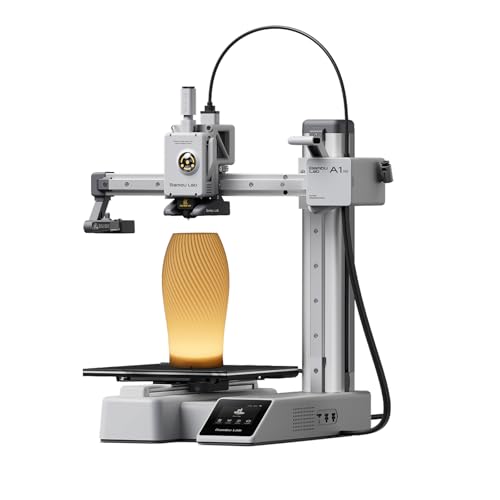
- Automatic calibration keeps setup simple
- Quiet operation under 48 dB
- MakerWorld library and app support
Best For: Beginners who want a quiet, ready-to-use printer
Smart Resin Detail Pick
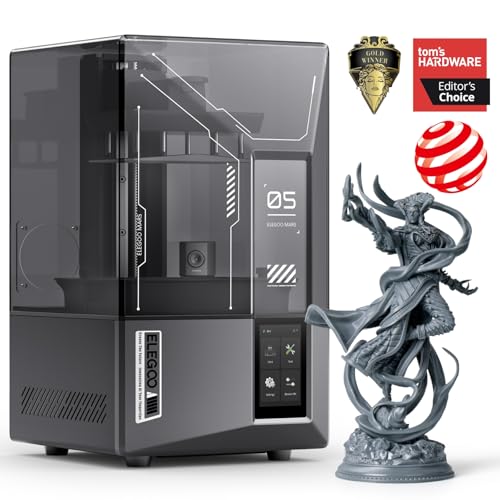
- 7-inch 9K mono LCD for detailed prints
- Smart automatic leveling and detection
- WiFi transfer for easier file handling
Best For: Hobbyists who want a smart resin printer for small models
Starter STEM Mini

- Fully assembled and starts in as fast as 8 minutes
- Auto leveling with app, WiFi, and TF card support
- Includes STEM modules and a model library
Best For: Kids and first-time users learning on a compact mini printer
Editor’s Pick
ANYCUBIC Photon Mono 4 10K Detail Resin Printer

- 7" 10K LCD with 17 x 17µm pixels
- Stable LighTurbo lighting for smoother detail
- Beginner-friendly 4-point leveling and adhesion
Best For: Miniature makers who want maximum detail in a compact resin printer
Most Beginner-Friendly
ELEGOO Mars 5 Auto-Leveling Resin Printer
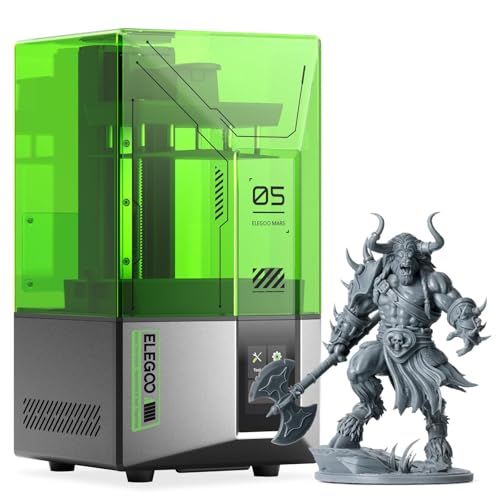
- Automatic leveling simplifies setup
- 4K mono LCD for small detailed prints
- Compact size for miniature-scale jobs
Best For: Beginners who want an easy-to-use resin printer for miniatures
Best Mid-Size Build
Phrozen Sonic Mighty 4K Miniatures Printer

- 52µm XY resolution for tabletop detail
- 7.9 × 4.9 × 8.7 inch build volume
- Dual linear rails and broad resin compatibility
Best For: Users who want a larger resin printer for miniatures without losing fine detail
High-Detail Resin Upgrade
ANYCUBIC Photon Mono 4 10K LCD Printer

- 7-inch 10K mono LCD for crisp miniature detail
- LighTurbo light source helps smooth layer lines
- 6.04" x 3.42" x 6.49" build volume for hobby projects
Best For: Miniature makers who want high-detail resin prints with a practical build size
Durable Miniature Resin
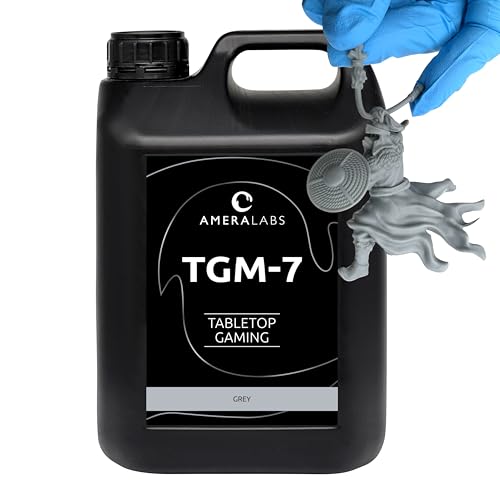
- Designed for professional-quality tabletop miniatures
- Tough, slightly flexible resin helps prevent breakage
- Hard, non-sticky cured surface is easy to paint
Best For: Hobbyists and small sellers who need durable, high-detail grey resin
Easy-Start Resin Printer
Creality HALOT R6 Beginner Resin Printer

- Fully assembled with a boot guide for easy setup
- 2K LCD and uniform light source for smoother prints
- Compact 4.25kg design saves space
Best For: Beginners who want an easy-to-use resin printer for miniatures
Miniature Detail King – Phrozen Sonic Mini 8K S
If you want a 3d printer for miniatures with a strong focus on surface detail, the Phrozen Sonic Mini 8K S is built around precision. Its 22-micron XY resolution and 8K mono LCD are aimed at capturing tiny features cleanly, while the compact resin format suits small models, figures, and tabletop pieces.
Best For: Hobbyists and beginners who want crisp miniature detail in a compact resin printer.
Pros:
- 22-micron XY resolution and 8K mono LCD for fine detail
- Compact build volume fits miniatures and action figures
- Open compatibility with slicers like Lychee, Chitubox, and Tango
- Positioned as beginner friendly with user-friendly specs
Cons:
- Resin printing requires more post-processing than many FDM options
- Build volume is sized for small-format projects, not large models
Overall, this is a strong pick if your main priority is sharp miniature output rather than large print capacity. The precision-focused hardware and flexible software support make it a practical entry point into resin printing for detailed hobby work.
Beginner All-Rounder – Bambu Lab A1 mini with LED Kit
The Bambu Lab A1 mini is a practical 3d printer for miniatures if you want a setup that is easy to live with and quick to get running. It is designed for beginners with automatic calibration, a quiet footprint, and access to MakerWorld’s model library, which can help you move from setup to printing without much friction.
Best For: Beginners who want an easy, quiet, ready-to-use printer for everyday hobby projects.
Pros:
- Full-auto calibration and simple setup for new users
- Quiet operation at under 48 dB
- MakerWorld library and Bambu Handy app streamline model access and print management
- Included LED Lamp Kit adds extra creative project options
Cons:
- It is positioned as a general creative printer, not specifically a resin detail machine
- Smaller build size may limit larger projects
If you value convenience and a smooth beginner experience, the A1 mini stands out as an approachable entry point. It is especially appealing for users who want a simple home printer that can support miniatures along with other small creative builds.
Smart Resin Detail Pick – ELEGOO Mars 5 Ultra
The ELEGOO Mars 5 Ultra is a smart resin 3d printer for miniatures with features that focus on easier setup and reliable handling. Its 7-inch 9K mono LCD, automatic leveling, intelligent detection, and WiFi transfer make it a strong match for users who want detailed prints with less manual adjustment.
Best For: Miniature makers who want a smart, detail-focused resin printer with modern convenience features.
Pros:
- 7-inch 9K mono LCD supports fine detail work
- Smart automatic leveling reduces setup effort
- Intelligent detection can help improve print reliability
- WiFi transfer adds convenient file handling
Cons:
- Printing size is compact and better suited to small models
- Resin workflow may be less convenient than simple FDM printing for some users
This model makes sense if you want miniature-friendly detail with a more automated user experience. It balances resolution and convenience well for hobbyists who prioritize small, refined prints.
Starter STEM Mini – Entina Tina2C
The Entina Tina2C is a compact starter 3d printer for miniatures and other small projects, especially if you value easy setup over advanced performance. It arrives fully assembled, supports guided app-based setup, and includes auto leveling plus a small 3.9 x 3.9 x 3.9 inch build area for beginner-friendly printing.
Best For: Kids, families, and first-time users who want a simple mini printer for learning and small DIY builds.
Pros:
- Fully assembled and designed to start in as fast as 8 minutes
- Auto leveling and power-loss recovery support easier printing
- App, WiFi, and TF card options add flexibility
- Built-in model library and STEM modules suit learning-focused use
Cons:
- Very small 3.9 x 3.9 x 3.9 inch print volume
- FDM design is more about easy beginner use than ultra-fine miniature detail
For newcomers, this printer’s biggest advantage is how quickly it gets you printing with minimal setup. It is best treated as a learning-friendly mini machine for small creative jobs rather than a detail-first miniature specialist.
Editor’s Pick – ANYCUBIC Photon Mono 4 10K Detail Resin Printer
If you want a 3d printer for miniatures that prioritizes fine surface detail, the ANYCUBIC Photon Mono 4 is built around a 7-inch 10K mono LCD and a stable LighTurbo light source. Its 17 x 17µm pixel size and balanced lighting are aimed at producing crisp, smooth models, while the compact resin format still leaves enough room for everyday miniature projects.
Best For: Hobbyists who want very fine detail, straightforward setup, and a compact resin printer for miniature work.
Pros:
- 7″ 10K LCD with 9024 x 5120 resolution for high-detail output
- LighTurbo matrix light source helps reduce layer lines and rasterization
- Laser-engraved print platform improves adhesion and makes removal easier
- 4-point leveling is designed to be beginner-friendly
Cons:
- Build volume is smaller than larger resin printers
- Anycubic APP service is not supported for this model
Overall, the Photon Mono 4 is the strongest fit here if your top priority is miniature detail over sheer print size. It combines precision-focused hardware with simple operation, making it a practical pick for detailed tabletop pieces.
Most Beginner-Friendly – ELEGOO Mars 5 Auto-Leveling Resin Printer
The ELEGOO Mars 5 is a practical 3d printer for miniatures if you want a simple setup with automatic leveling and a compact footprint. Its 4K mono LCD and 5.65 × 3.53 × 5.91 inch build size give you a focused workspace for small detailed prints without adding much complexity.
Best For: New resin users who want an easier first printer for miniature-scale projects.
Pros:
- Automatic leveling reduces setup hassle
- 4K mono LCD is suited to detailed small prints
- Compact build volume fits miniatures and other small parts
Cons:
- No detailed speed or light-source specs were provided in the notes
- Smaller print size limits larger batch jobs
If you care more about getting started smoothly than chasing the highest specification list, the Mars 5 is a sensible choice. It focuses on the essentials that matter for miniature printing: manageable size, automatic leveling, and a detail-oriented LCD panel.
Best Mid-Size Build – Phrozen Sonic Mighty 4K Miniatures Printer
The Phrozen Sonic Mighty 4K is a balanced 3d printer for miniatures when you want more build room without giving up tabletop-friendly detail. With a 9.3-inch monochrome LCD, 52µm XY resolution, and a 7.9 × 4.9 × 8.7 inch printing volume, it is set up for reliable miniature and action figure work on a larger resin platform.
Best For: Makers who need a stronger mix of print volume and fine detail for miniatures and small models.
Pros:
- 52µm XY resolution is targeted at detailed tabletop figures
- Mid-size build volume gives more room for larger miniature batches
- Dual linear rails support stable Z-axis motion
- Compatible with most third-party 405nm UV resins
Cons:
- Larger than compact entry-level resin printers
- Still not as roomy as full-size resin machines
For hobbyists who want to print miniatures, prototypes, and action figures with a little more flexibility, the Sonic Mighty 4K lands in a very practical middle ground. It offers a strong combination of size, stability, and resin compatibility for regular tabletop use.
High-Detail Resin Upgrade – ANYCUBIC Photon Mono 4 10K LCD Printer
If you want a 3d printer for miniatures with maximum detail, the Anycubic Photon Mono 4 is built around a 7-inch 10K mono LCD and 17x17um pixel size. Its 10K resolution and LighTurbo matrix light source are aimed at producing smooth surfaces, fine textures, and clean layer transitions for highly detailed resin models.
Best For: Hobbyists and miniature makers who want high-detail resin printing with a practical mid-size build volume.
Pros:
- 7-inch 10K mono LCD with 9024 x 5120 resolution for very fine detail
- LighTurbo matrix light source helps reduce layer lines and rasterization
- Large 6.04″ x 3.42″ x 6.49″ build area suits daily projects and larger batches
- Pre-assembled, calibrated, and tuned before shipment for easier setup
Cons:
- Resin printing requires leveling and post-processing, so it is not the simplest no-maintenance option
- Best results depend on careful handling of the build platform and resin workflow
This is a strong pick if your priority is miniature detail over simplicity, especially for tabletop figures that benefit from crisp surfaces and clean feature definition. The included resume-printing support and stable platform design add practical value for consistent results.
Durable Miniature Resin – TGM-7 Tough Grey Resin 5kg
If you already have a 3d printer for miniatures and need a resin tuned for the job, TGM-7 is positioned as a professional-quality tabletop miniature resin. The notes emphasize high detail, a hard non-sticky surface after curing, and enough toughness with a bit of flex to handle shipping, painting, and gaming use.
Best For: Miniature hobbyists and small sellers who want durable, high-detail grey resin for tabletop models.
Pros:
- Made specifically for professional-quality tabletop miniatures
- High detail reproduction for fine expressions and model features
- Tough with a bit of flex to help resist breakage during use and shipping
- Hard, non-sticky cured surface that is easy to paint
Cons:
- Only works as a resin material, so it is not a standalone printer
- Requires short post-curing to reach the described hard finish
- Performance depends on compatible resin printers and settings
This is a smart consumable choice if your priority is miniature durability without giving up surface quality. The 5kg size also makes sense for heavier hobby use or small-volume selling.
Easy-Start Resin Printer – Creality HALOT R6 Beginner Resin Printer
For someone choosing a 3d printer for miniatures for the first time, the Creality HALOT R6 focuses on simplicity and consistency. It is fully assembled, includes a boot guide, and uses a 2K 6.08-inch LCD with an integral light source designed to improve layer uniformity and overall print quality.
Best For: Beginners and younger users who want an easy-to-start resin printer for miniature projects.
Pros:
- Fully assembled and built for zero-basic newbies
- Built-in boot guide helps with networking and initial setup
- Integral light source with >90% uniformity supports smoother prints
- Compact 4.25kg body saves desk space
Cons:
- 2K screen is lower resolution than some higher-end miniature-focused printers
- Smaller body size means less overall print room than larger resin machines
- Best suited to ease of use rather than maximum detail
The HALOT R6 is the most approachable option here if you value a straightforward first resin printer. Its setup help, compact frame, and stability-focused design make it practical for learning miniature printing without a steep learning curve.
How We Picked the Best 3d Printer for Miniatures
For miniature printing, the most important factors are fine XY detail, stable motion or exposure control, dependable leveling, and a build volume that fits common figure sizes without wasting resin. We also favored printers that reduce setup friction, since beginners often value easy calibration and straightforward workflows as much as print quality.
We looked at resin-focused machines first because they generally outperform FDM printers for tiny features like faces, weapons, armor trim, and textured bases. We also considered beginner-friendly options for users who want a lower learning curve.
Quick Comparison
If your priority is maximum detail, choose a high-resolution resin printer. If you want a simpler entry point, look for automatic leveling and guided setup. For larger mini batches or bigger terrain pieces, a printer with a taller build area can save time and reduce split-part modeling.
Key Buying Factors for a 3d Printer for Miniatures
Resolution and Detail
XY resolution has a direct effect on how well a 3d Printer for Miniatures can capture fine features. Higher-resolution LCD resin printers are usually the best fit for gaming figures and display models.
Build Volume
A compact build plate is fine for individual heroes, but a larger volume helps when printing squads, busts, or terrain pieces. Match the printer size to the scale of your projects so you are not paying for space you will never use.
Ease of Setup
Automatic leveling, guided calibration, and reliable software support can make a huge difference, especially if you are new to resin printing. Easier setup usually means fewer failed prints and less frustration.
Workflow and Cleanup
Resin printing delivers excellent detail, but it also requires washing, curing, gloves, ventilation, and careful handling. If you want the best results, budget for the full post-processing workflow rather than the printer alone.
Speed and Throughput
Fast printers are useful if you print large armies or run multiple miniatures at once. That said, speed should not come at the expense of surface quality or consistency.
Who Should Buy Which 3d Printer for Miniatures?
Beginners should prioritize easy leveling, simple controls, and a small learning curve. Hobbyists who care most about tiny details should lean toward high-resolution resin models. If you want larger mini batches or more flexibility, choose a printer with a bigger build volume and strong ecosystem support.
If your main goal is display-quality miniatures, a resin machine is usually the smartest choice. If you want a broader-purpose printer that can still handle minis, a beginner-friendly desktop model may offer the best balance of convenience and versatility.