Choosing the right portable power station for RV use comes down to real-world power needs: appliances, charging speed, battery chemistry, and whether you want a compact backup or a true off-grid setup.
Below, we focused on RV-friendly models that balance output, runtime, portability, and expansion potential so you can match your rig and travel style with confidence.
Best 10 Portable Power Station for Rv Use Picks for 2026
High-Capacity RV Power

- 2400W output with 3600W power lifting
- 30A RV port and 11 total ports
- Expandable to 8192Wh with add-on batteries
Best For: RV travelers needing high output and expandable capacity
Compact Whole-Trip Backup

- 3072Wh capacity with 3600W AC output
- Built-in TT-30 RV port for easy hookup
- Under-20ms UPS for sensitive devices
Best For: RVers wanting a backup-ready all-rounder
Lightweight RV Companion

- 1070Wh capacity in a 23.8 lb build
- 1500W output with 3000W surge
- 1-hour fast charging via the app
Best For: Light-duty RV travelers prioritizing portability
Ultra-High Output RV Backup
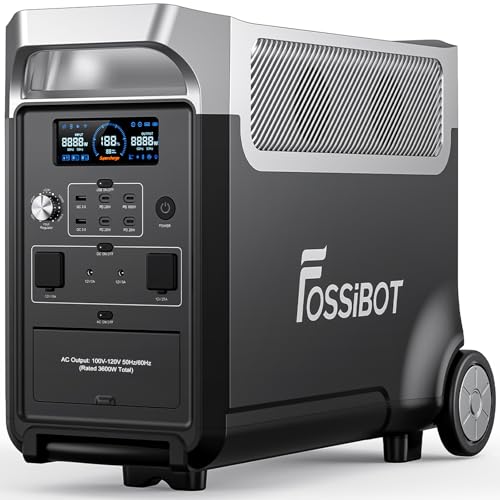
- 3600W output with 3840Wh capacity
- Expandable to 11,520Wh for longer trips
- 2200W AC and 2000W solar fast recharge
Best For: RV users needing maximum capacity and expansion
Fast-Charging Compact Pick
Anker SOLIX C1000 Portable Power Station

- 1,056Wh LiFePO4 battery with 1,800W output
- 80% charge in 43 minutes with UltraFast AC charging
- 15% smaller than comparable 1kWh units
Best For: RV travelers who want fast recharging and a compact footprint
Heavy-Duty Expandable Pick
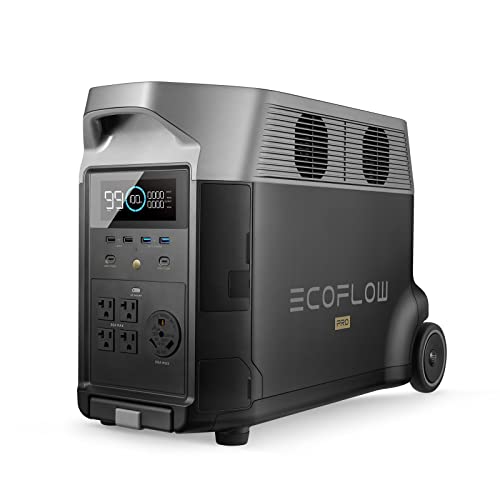
- 3,600Wh LFP battery expandable to 25kWh
- 3,600W output with up to 15 output methods
- Fast charging from wall, solar, EV, or car
Best For: RV owners who need maximum capacity and expansion
Wheeled High-Capacity Pick
ABOK Ark3600 Portable Power Station

- 3,840Wh LiFePO4 battery expandable to 11,520Wh
- 3,600W rated output with 4,500W peak
- Wheels and telescoping handle improve mobility
Best For: RV users who want high capacity with easier transport
Home Backup Giant
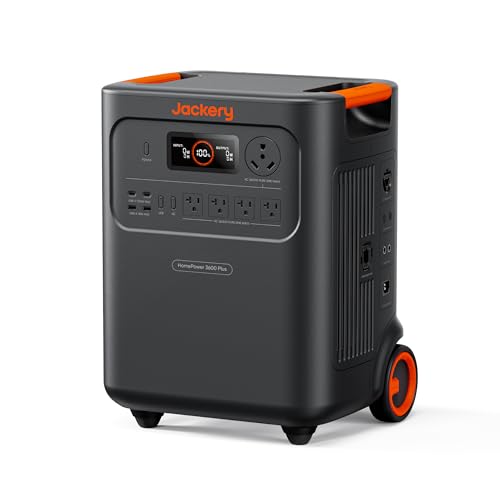
- 3600W output with 7200W in parallel
- 3584Wh capacity expands up to 21kWh
- Wheels and telescopic handle aid movement
Best For: RV owners needing maximum output and expandable capacity
Fast-Charge Compact Pick
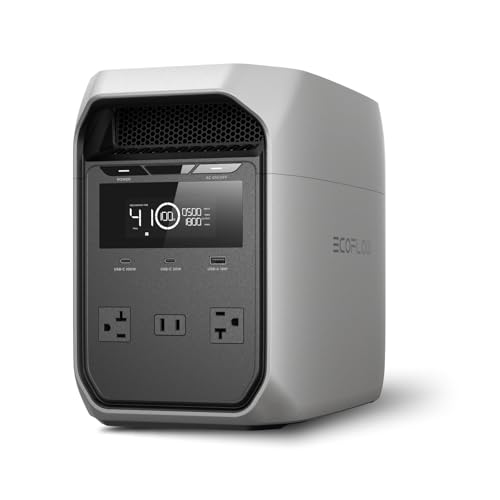
- 1024Wh battery with 1800W AC output
- Charges to 80% in about 45 minutes
- <10ms UPS and app-based controls
Best For: Travelers wanting a compact, fast-charging RV power station
High-Power RV Workhorse

- 2800W pure sine wave output
- 0–80% charge in 38 minutes
- Expands from 2048Wh to 10.24kWh
Best For: RV owners needing fast charging and high output
High-Capacity RV Power – BLUETTI AC200L 2048Wh 2400W
If you want a portable power station for rv use that can handle bigger loads and recharge quickly, the BLUETTI AC200L is built for that kind of serious travel and backup duty. Its 2400W output, 30A RV port, and expandable battery design make it a strong fit for campers who want more than just phone charging.
Best For: RV owners who want high output, fast recharge, and room to expand capacity.
Pros:
- 2400W output with 3600W power lifting for demanding RV and home loads
- 30A RV port plus 48V/8A DC port for RV-focused power needs
- Fast 0-80% AC recharge in about 45 minutes
- Expandable up to 8192Wh with compatible battery packs
Cons:
- At 61.4 pounds, it is not the lightest option to move around
- Expansion batteries are sold separately
The AC200L stands out when you need a more capable RV power setup that can grow with your trips. It offers a practical mix of output, charging speed, and RV-specific connectivity for users who need dependable off-grid power.
Compact Whole-Trip Backup – Jackery HomePower 3000
The Jackery HomePower 3000 is a strong portable power station for rv use if you want home-backup-grade output in a package that still works for travel. With 3072Wh of capacity, a 3600W AC output, and a built-in TT-30 RV port, it is set up for both emergencies and campground convenience.
Best For: RVers who want a large-capacity unit that doubles as serious home backup.
Pros:
- 3600W AC output with 7200W surge for bigger appliances
- Built-in TT-30 RV port for plug-and-play RV power
- UL-certified UPS switching in under 20ms for sensitive gear
- LiFePO4 battery rated for 4,000 cycles to 70% capacity
Cons:
- At 59.5 pounds, it is still a substantial unit to transport
- Solar charging speed depends on paired panel setup
For buyers who want one unit to cover outages at home and power needs on the road, this model has a well-rounded feature set. The RV port, fast recharge options, and high output make it especially practical for extended trips.
Lightweight RV Companion – Jackery Explorer 1000 v2
If you need a portable power station for rv use without hauling a giant battery, the Jackery Explorer 1000 v2 keeps things compact and capable. Its 1070Wh capacity, 1500W output, and 23.8-pound build make it a practical choice for short trips, light RV duty, and emergency charging.
Best For: Campers and RV users who want a lighter power station for essential devices.
Pros:
- 1500W AC output with 3000W surge for common appliances
- Only 23.8 pounds, with a foldable handle for easier carrying
- 1-hour fast charging available through the app
- Two USB-C ports, USB-A, DC car port, and three AC outlets
Cons:
- Smaller capacity than larger RV-focused power stations
- Solar charging works only with Jackery solar panels
This is a smart pick when portability matters more than maximum runtime. It gives RV owners a manageable size, fast recharge options, and enough output for essentials without overcommitting on weight.
Ultra-High Output RV Backup – FOSSiBOT F3600 PRO
The FOSSiBOT F3600 PRO is a heavyweight portable power station for rv use when you need big output and long runtime. With 3840Wh of base capacity, 3600W AC output, and expandable storage up to 11.5kWh, it is aimed at RVs, off-grid living, and emergency backup.
Best For: RV owners who want maximum power, fast recharge, and expansion headroom.
Pros:
- 3600W output and 3840Wh base capacity for demanding loads
- Expandable to 11,520Wh for much longer runtime
- Fast recharge with up to 2200W AC input and 2000W solar input
- 10ms UPS mode plus 13 output ports for versatile use
Cons:
- Large physical size makes it less convenient to move frequently
- More capability than casual weekend campers may need
If your RV setup needs something closer to a mobile power wall than a small battery box, this unit delivers that scale. Its fast charging, expandable design, and UPS support make it a strong option for users with heavier power demands.
Fast-Charging Compact Pick – Anker SOLIX C1000 Portable Power Station
If you want a portable power station for rv use that can top off quickly between stops, the Anker SOLIX C1000 is built for fast turnaround and everyday versatility. Its 1,056Wh LiFePO4 battery, 1,800W output, and 11 ports make it a practical choice for running common RV gear, while the compact design helps it fit travel life better than bulkier 1kWh-class units.
Best For: RV travelers who want fast AC recharging, solid output, and a smaller footprint.
Pros:
- Charges to 80% in 43 minutes and fully in under an hour with UltraFast AC charging.
- 1,800W output with SurgePad up to 2,400W supports 99% of appliances.
- 15% smaller than comparable 1kWh units, which helps in tighter RV storage spaces.
- Up to 600W solar input adds flexible off-grid charging.
Cons:
- UltraFast charging requires the Anker app and a smartphone.
- 1,056Wh capacity is smaller than large expandable RV-focused stations.
- Best charging performance depends on favorable operating temperatures.
This is a strong pick if your priority is speed and portability over maximum capacity. For shorter RV trips, weekend camping, or backup power with frequent recharging, it offers a very balanced feature set.
Heavy-Duty Expandable Pick – EcoFlow DELTA Pro 3600Wh
For a portable power station for rv use that leans toward serious capacity, the EcoFlow DELTA Pro stands out with a 3,600Wh LFP battery and 3,600W AC output. It is designed for larger power demands, and its expandable system makes it a flexible option when your RV setup needs more than a basic travel battery.
Best For: RV owners who need high output, expandable storage, and lots of ports.
Pros:
- 3,600Wh base capacity expands up to 25kWh with extra batteries or smart generators.
- 3,600W output can be expanded to 4,500W with X-Boost, with 7,200W possible by pairing two units.
- 15 output methods make it easy to power several devices at once.
- Fast charging options include wall, solar, EV station, and car outlet input.
Cons:
- At 99 pounds, it is far less portable than smaller RV power stations.
- Large size may be overkill for light-duty weekend use.
- Higher-capacity setup adds cost and complexity if expanded.
DELTA Pro is a strong fit for RV users who want a power station that can scale with their needs. If you want a more home-backup-style unit that can still travel, this is the most capable option in this group.
Wheeled High-Capacity Pick – ABOK Ark3600 Portable Power Station
If you need a portable power station for rv use with big capacity and easier transport, the ABOK Ark3600 is built around a 3,840Wh LiFePO4 battery and a wheeled, telescoping-handle design. It combines strong output, fast charging, and plenty of ports, making it a practical option for larger RV setups and longer off-grid stays.
Best For: RV users who want high capacity, wheels, and fast combined charging.
Pros:
- 3,840Wh capacity expands up to 11,520Wh for longer trips or heavier use.
- 3,600W rated output and 4,500W peak support most household appliances.
- Charges in 3 hours on AC alone or about 1.29 hours with AC + PV combined.
- Wheels and a telescoping handle make it easier to move around than heavy box-style units.
Cons:
- Still a large, heavy-capacity unit despite the wheeled design.
- Solar and inverter compatibility must be checked carefully before use.
- Charging is temperature-sensitive and may be delayed below 32°F.
Ark3600 is a compelling middle ground for RV owners who want real output without giving up transport convenience. Its combination of capacity, expandability, and mobility makes it well suited to extended travel or backup-minded RV use.
Home Backup Giant – Jackery HomePower 3600 Plus
If you want a portable power station for rv use with serious output, the Jackery HomePower 3600 Plus is built for bigger electrical demands. Its 3600W AC output, dual-voltage support, and expandable capacity make it a strong fit for RV owners who need to run more than just phones and lights.
Best For: RV users who want high-capacity backup power and room to scale for heavier appliances.
Pros:
- 3600W output with 7200W in parallel for demanding loads
- 3584Wh capacity expands up to 21kWh per unit
- Fast charging options include hybrid AC+DC, AC, solar, or gas generator
- Luggage-style wheels and telescopic handle improve portability
Cons:
- At 77.2 pounds, it is still a substantial unit to move
- Solar panel is optional, so off-grid charging may require extra purchases
The Jackery HomePower 3600 Plus stands out for RV buyers who prioritize power first and portability second. It is especially useful if you want one unit that can handle high-wattage needs and still roll easily from place to place.
Fast-Charge Compact Pick – EcoFlow DELTA 3 Classic
For buyers comparing a portable power station for rv use, the EcoFlow DELTA 3 Classic is a compact option with a strong balance of speed and versatility. Its 1024Wh battery, 1800W AC output, and rapid charging make it a practical choice for common RV electronics and short-stop power needs.
Best For: RV travelers who want a lightweight, fast-charging station for everyday appliances and electronics.
Pros:
- 1800W output with 3600W surge and X-Boost support
- Charges from 0–80% in about 45 minutes via AC
- <10ms UPS helps protect sensitive electronics
- Smart app control for monitoring and charging schedules
Cons:
- 1024Wh capacity is smaller than larger RV-focused units
- Solar panel is optional, so solar setup is extra
The DELTA 3 Classic is a strong fit if you value speed, portability, and smart controls over maximum runtime. It is easy to see why this model appeals to RV users who want quick top-ups and dependable power for everyday gear.
High-Power RV Workhorse – AFERIY P280
The AFERIY P280 is a heavy-duty portable power station for rv use when you need high output and quick recharge times. With 2800W AC output, a 2048Wh LiFePO4 battery, and expandable storage, it is designed for RV owners who want dependable power with less waiting between charges.
Best For: RV users who want strong inverter output, fast charging, and easy solar expansion.
Pros:
- 2800W output with a pure sine wave inverter
- Charges from 0–80% in just 38 minutes
- 2048Wh capacity expands up to 10.24kWh with extra batteries
- Dual PV inputs can simplify solar upgrades
Cons:
- At 44 pounds, it is not the lightest option
- Only one total power outlet is listed in the supplied details
Overall, the P280 is a solid pick if your RV setup needs more output than a basic camping station can offer. Its fast charging, UPS support, and expandable design make it especially appealing for buyers planning longer trips or more demanding loads.
How We Picked the Best Portable Power Station for Rv Use
For a Portable Power Station for Rv Use, we prioritized AC output strong enough for common travel appliances, LiFePO4 battery longevity, practical charging options, and features that matter on the road such as RV outlets, UPS support, and expandable capacity. We also favored models that offer a good mix of portability and usable watt-hours rather than raw specs alone.
Quick Comparison
In broad terms, smaller 1 kWh-class units are best for phones, laptops, fans, lights, and short appliance runs. Mid-size 2 kWh systems are a stronger fit for weekend RVers who want more runtime for CPAPs, refrigerators, and coffee makers. Larger 3 kWh-plus units are better for boondocking, heavier loads, and travelers who want a more dependable off-grid power hub.
Key Buying Factors for Portable Power Station for Rv Use
Battery Capacity and Runtime
Match watt-hours to your daily usage. If you only need overnight charging and light appliance support, a smaller unit may be enough. If you run a fridge, medical device, or multiple electronics, look for higher capacity or expandable battery packs.
Continuous Output and Surge Power
Check both rated AC output and surge rating. Many RV appliances draw a brief startup spike, so a unit with enough headroom will perform more reliably than one with a high battery size but limited inverter output.
Charging Speed and Recharging Options
Fast wall charging is useful between campground stops, while solar input matters for longer stays and boondocking. If you travel often, prioritize models that can recharge quickly from AC, solar, or your vehicle setup.
Ports, RV Connectivity, and Convenience
Look for the mix of outlets you actually use: standard AC, USB-C, 12V, and dedicated RV outputs if your setup calls for them. Features like app control, UPS mode, and pass-through charging can also improve day-to-day usability.
Who Should Buy Which Portable Power Station for Rv Use?
If you want a compact travel companion for light-duty power, choose a smaller-capacity option. If you need a balance of portability and real RV functionality, a mid-size unit is usually the sweet spot. If you boondock frequently or want to support high-demand appliances, go with a larger expandable system built for long runtimes and future growth.
For the best Portable Power Station for Rv Use, focus less on the biggest number and more on the combination of output, battery chemistry, recharge speed, and how well the system fits your travel habits.