Choosing a small wood lathe for beginners is easier when you know what really matters: stable operation, simple controls, and enough power for safe learning. The best starter lathe should make it easier to practice the basics, not get in the way.
In this roundup, we focus on compact, beginner-friendly models that can handle spindle work, small bowls, and everyday practice projects without overwhelming a new woodturner.
Best 10 Small Wood Lathe for Beginners Picks for 2026
Beginner-Friendly Variable Speed Starter
WEN Mini Benchtop Wood Lathe, 8-Inch by 13-Inch

- 8-inch swing and 13-inch center distance for small projects
- Soft-start 3.2-amp motor helps with safer starts
- 750 to 3200 RPM variable speed for different turning tasks
Best For: New woodturners working on pens, bowls, and other small pieces
Budget Mini Multi-Tool Option
Mini Lathe Machine with Professional Tools

- 96W motor with 7-speed regulation for light-duty work
- Includes HSS cutters, chuck, and accessory support
- Picture instructions and video tutorials help beginners
Best For: DIY beginners who want a compact starter kit for miniature projects
Classic Small Benchtop Choice
WEN 3421 8-Inch by 12-Inch Mini Lathe
- 8-inch swing with 12-inch workpiece capacity
- 3.2-amp soft-start motor with variable speed
- Includes face plate, spindle/tailstock taper, and two rests
Best For: Beginners who want a compact, familiar mini lathe for small work
Large-Capacity Heavy-Duty Pick
VEVOR 14 x 40 Benchtop Wood Lathe

- 14 x 40 capacity handles larger projects
- 1/2 HP motor with 4 speed settings
- Thermal protection and metal frame improve stability
Best For: Beginners ready for a bigger benchtop lathe and larger workpieces
Stable Starter Benchtop Lathe
8x12 Variable-Speed Wood Lathe
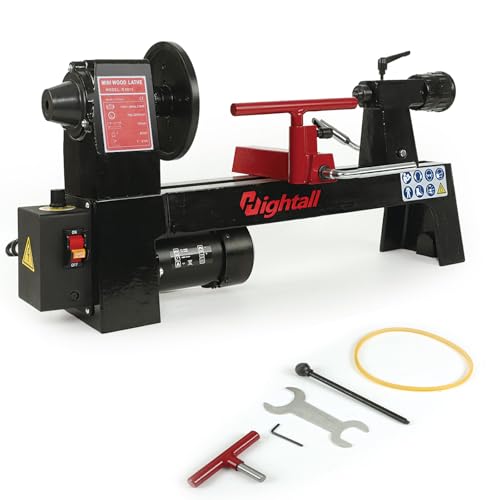
- 8x12 benchtop size with cast iron build
- Infinitely variable 750-3200 rpm control
- Includes spare belt and extra tool rest
Best For: beginners who want a sturdier lathe for small bowls, cups, and handles
Beginner Power Pick
VEVOR 12 x 18 in 1 HP Bench Lathe

- 1 HP motor with up to 3800 RPM
- 12 x 18 in bed for small projects
- Brushless DC motor with low-noise operation
Best For: New turners who want compact size and strong performance
Simple 4-Speed Starter
VEVOR 14 x 40 in 4-Speed Lathe

- Four speeds from 885 to 2425 RPM
- 14 x 40 in bed for small items
- Includes chisels and setup accessories
Best For: New woodturners who want simple speed control and extra bed length
Flexible Speed Starter
Garvee 14 x 40 in Variable-Speed Lathe

- Infinitely variable speed from 1040 to 2980 RPM
- 14 x 40 in bench for small projects
- Stable aluminum alloy base and steel headstock
Best For: Beginners who want finer speed control and a stable benchtop machine
Beginner-Friendly Variable Speed Starter – WEN Mini Benchtop Wood Lathe, 8-Inch by 13-Inch
If you’re looking for a small wood lathe for beginners, this WEN mini benchtop model is a practical place to start. It gives you the compact footprint needed for small projects like pens, bowls, cups, and chess pieces, while the variable speed range makes it easier to adjust as your turning skills improve.
Best For: Beginners who want a compact, variable-speed lathe for small turning projects.
Pros:
- 8-inch swing and 13-inch distance between centers suit small workpieces.
- Soft-start 3.2-amp motor helps reduce startup stress and improves safety.
- Variable speed control from 750 to 3200 RPM adds flexibility for different tasks.
- Includes a face plate, MT1 spindle and tailstock taper, and two tool rests.
Cons:
- Designed for small projects rather than larger stock.
- Included accessories are basic rather than expansive.
This is a straightforward beginner lathe with the essential features most new woodturners need to get started. Its compact size and soft-start motor make it approachable, while the adjustable speed range gives you room to grow into more confident turning.
Budget Mini Multi-Tool Option – Mini Lathe Machine with Professional Tools
This small wood lathe for beginners is aimed at DIY users who want an all-in-one starter setup for miniature projects. It supports turning, cutting, grinding, fine grinding, and polishing, so it can cover more than just basic wood shaping if you want to experiment with different materials and techniques.
Best For: Beginners who want a compact, multi-purpose mini lathe with included tools and tutorials.
Pros:
- 96W motor and 7-speed regulation provide basic control for small projects.
- Includes professional mini woodworking tools with hardened HSS steel cutters.
- Multi-purpose chuck makes wood fixing easier during setup.
- Comes with picture instructions, video tutorials, and after-sales technical support.
Cons:
- Low power output limits it to light-duty work.
- Best suited to miniature tasks rather than larger turning projects.
For beginners focused on small models, this machine stands out for its tool bundle and learning support. It looks more like a hobby mini-lathe than a traditional benchtop wood lathe, but that may be exactly what a first-time user wants.
Classic Small Benchtop Choice – WEN 3421 8-Inch by 12-Inch Mini Lathe
If you want a proven small wood lathe for beginners, this WEN 3421 keeps the formula simple and effective. It is sized for pens, bowls, cups, chess pieces, and similar workpieces, while the variable speed soft-start motor helps make first projects feel more manageable.
Best For: New woodturners who want a compact, well-known mini lathe for small projects.
Pros:
- 8-inch swing and 12-inch capacity handle common beginner projects.
- 3.2-amp motor offers more power than many 8-inch lathes.
- Variable speed from 750 to 3200 RPM supports different turning stages.
- Includes a face plate, MT1 spindle and tailstock taper, and two tool rests.
Cons:
- Works only with smaller workpieces.
- Accessory package is fairly basic.
This is a strong entry-level option if you want a compact lathe from a familiar line. Its balance of size, power, and variable speed makes it especially practical for learning the basics of woodturning.
Large-Capacity Heavy-Duty Pick – VEVOR 14 x 40 Benchtop Wood Lathe
Most small wood lathe for beginners guides focus on compact machines, but this VEVOR model is better if you want a larger benchtop lathe from the start. It offers a 14 x 40 inch capacity, four speed settings, and a 1/2 HP motor, making it more suitable for bigger turning jobs than a typical mini lathe.
Best For: Beginners who expect to work on larger projects and want a more robust benchtop lathe.
Pros:
- 14 x 40 inch size accommodates larger workpieces like table legs and canes.
- 1/2 HP motor and 4 speeds support roughing and fine finishing.
- Thermal protection adds a layer of safety during longer use.
- Heavy metal frame helps reduce vibration for more stable turning.
Cons:
- Much larger than a typical beginner mini lathe.
- May be more machine than a first-timer needs for pens or small bowls.
This VEVOR is less of a starter mini-lathe and more of a step-up benchtop machine. It makes sense if you want a sturdier platform and can handle the extra size in exchange for more capacity and versatility.
Compact Beginner Mini Lathe – 100W Multi-Purpose Tabletop Wood Lathe
If you want a small wood lathe for beginners, this tabletop mini lathe is built around ease of use and versatility. It offers a 100W high-torque motor, 7 adjustable speeds, and included turning tools, so you can start practicing basic turning, cutting, grinding, and polishing without moving to a larger machine.
Best For: Beginners who want a compact, multi-purpose lathe for small decorative projects and hands-on learning.
Pros:
- 7 adjustable speeds from 3500 to 10000 rpm for different tasks
- Includes professional HSS custom tools and a multi-functional fixed chuck
- Low-noise 100W motor suited to small hobby projects
- Useful support notes for beginners and instructional help
Cons:
- Compact size is better suited to small items than larger turnings
- 3.2-foot cord may limit placement flexibility
- Designed as a tabletop mini lathe, not a heavy-duty shop machine
This model makes sense if you want a guided entry into woodturning and plan to make small crafts like beads, pens, and decorative pieces. Its speed range and included tooling give it a practical start for learning core lathe skills.
Stable Starter Benchtop Lathe – 8×12 Variable-Speed Wood Lathe
This small wood lathe for beginners is a practical step up if you want more stability and a wider working range. The 8×12-inch benchtop design, cast iron body, and infinitely variable 750-3200 rpm speed control make it easier to handle different woods and machining stages while learning woodturning.
Best For: Beginners who want a more stable benchtop lathe for bowls, cups, handles, and other small turned parts.
Pros:
- Infinitely variable speed from 750 to 3200 rpm
- 1/3 HP motor provides solid power for entry-level work
- Cast iron construction and low vibration support accuracy
- Comes with a spare belt and an extra tool rest
Cons:
- Heavier than a mini tabletop lathe at 45.4 pounds
- Requires more bench space than ultra-compact models
- Focused on small workpieces rather than large turnings
For a beginner who values stability and adjustability, this model offers a well-rounded setup. The sturdier build and included extras make it a good choice for learning on a lathe you won’t outgrow too quickly.
Value Mini Turning Kit – 100W Tabletop Lathe With Accessories
If you’re shopping for a small wood lathe for beginners, this mini tabletop kit stands out for its included accessories and straightforward beginner focus. It uses a 100W high-torque motor, 7 adjustable speeds, and comes with a four-jaw chuck, saw blade, and turning tool, making it a flexible option for learning basic turning tasks.
Best For: Beginner hobbyists who want a compact lathe kit with extra accessories for trying different small projects.
Pros:
- Includes four-jaw chuck, saw blade, and turning tool
- 7 speed settings from 3500 to 10000 rpm
- Low-noise 100W motor for small DIY work
- Suitable for wood crafts, pens, beads, and similar projects
Cons:
- Best suited to small-scale work rather than larger turnings
- 3.2-foot cord may restrict setup options
- Same compact form factor as other mini tabletop models
This is a strong pick if you want a beginner-friendly lathe kit that arrives ready for a range of starter tasks. The included accessories add flexibility, while the speed range keeps it practical for learning different techniques.
Beginner Power Pick – VEVOR 12 x 18 in 1 HP Bench Lathe
If you’re shopping for a small wood lathe for beginners, this VEVOR benchtop model stands out for its mix of power, compact sizing, and simple variable-speed control. The 12 x 18 in work area is well suited to turning pens, bowls, cups, and small carvings, while the brushless DC motor keeps operation smooth and low-noise.
Best For: Beginners and hobbyists who want a compact lathe with enough power for a wide range of small turning projects.
Pros:
- 1 HP motor and up to 3800 RPM provide strong performance for cutting and shaping.
- Variable speed from 150 to 3800 RPM makes it easier to match the task.
- Cast iron construction helps reduce vibration for more stable turning.
- Includes essential accessories so you can get started right away.
Cons:
- Heavier benchtop design may be less convenient to move frequently.
- May offer more capacity and power than a very casual first-time user needs.
Overall, this is a strong pick if you want a beginner-friendly lathe that still leaves room to grow into larger and more demanding small woodworking projects.
Simple 4-Speed Starter – VEVOR 14 x 40 in 4-Speed Lathe
This small wood lathe for beginners offers a practical 14 x 40 in format that can handle pens, bowls, cups, chess pieces, and other small wooden items. With four speed settings and a stable aluminum alloy and steel build, it gives new woodturners a straightforward way to learn the basics without giving up useful capacity.
Best For: Beginners who want a longer bed and simple fixed speed settings for general small-project turning.
Pros:
- Four speed choices from 885 to 2425 RPM support different woods and tasks.
- 40-inch workbench provides room for a variety of small turning projects.
- Sturdy aluminum alloy base and steel headstock help limit vibration.
- Includes chisels and other accessories for DIY setup.
Cons:
- 0.5 HP motor is less powerful than higher-output models.
- Speed range is narrower than infinitely variable alternatives.
For beginners who value simplicity and a longer bed for everyday small projects, this VEVOR model is a sensible and approachable choice.
Flexible Speed Starter – Garvee 14 x 40 in Variable-Speed Lathe
If you want a small wood lathe for beginners with more precise speed control, this Garvee benchtop model is built around an infinitely variable range from 1040 to 2980 RPM. The 14 x 40 in size gives you room for common small turning projects, and the aluminum alloy base with steel headstock is designed to keep vibration under control.
Best For: Beginners who want variable speed flexibility and a stable benchtop layout for learning woodturning.
Pros:
- Infinitely variable speed lets you fine-tune the lathe to the task.
- 400W motor and up to 2980 RPM support efficient cutting and planing.
- 14 x 40 in footprint suits small project work.
- MT2 tapers add accessory compatibility for future expansion.
Cons:
- Comes with fewer listed accessories than some competing kits.
- Power output is modest compared with larger 1 HP options.
As a starter lathe, this Garvee model makes sense if you want smoother speed adjustment and a stable setup for building basic turning skills.
How We Picked the Best Small Wood Lathe for Beginners
For a Small Wood Lathe for Beginners, we prioritized straightforward setup, usable speed ranges, and a compact footprint that fits a garage, workshop, or bench. We also looked for solid build quality, enough motor strength for learning on real wood, and features that help reduce frustration, such as variable speed control, tool rests, and included accessories.
We gave extra weight to models that balance value with safety and ease of use, since first-time turners usually need confidence more than maximum capacity.
Quick Comparison: What Stands Out
Smaller benchtop lathes are usually the best starting point for spindle projects, pens, handles, and other light work. Larger 14-inch by 40-inch machines offer more turning length and capacity, but they can be heavier, pricier, and more than many beginners need at first.
If you want the simplest learning curve, look for a compact machine with variable speed and a manageable swing. If you expect to grow into larger projects soon, a sturdier mid-size model may be the better long-term choice.
Key Buying Factors for a Small Wood Lathe for Beginners
Size and Swing Capacity
Check the swing over bed and distance between centers. A smaller swing is fine for basic spindle turning, while more bed length gives you room for longer projects.
Speed Control
Variable speed is one of the most useful features for beginners. Slower speeds help with roughing and sanding, while higher speeds are useful for finishing and detail work.
Motor Power and Stability
Enough power helps the lathe cut smoothly without bogging down. A heavier base or cast-iron construction can also reduce vibration, which makes learning easier and safer.
Included Accessories
Tool rests, faceplates, wrenches, and chisels can add value, but they should not replace checking the machine itself. Accessories are helpful if they let you start turning sooner.
Ease of Adjustment
Beginners benefit from clear controls, easy belt or speed changes, and simple alignment. The less time you spend fighting the machine, the more time you spend learning technique.
Who Should Buy Which Small Wood Lathe for Beginners?
If you are brand new and want a compact practice machine, choose a smaller benchtop model with variable speed and a modest footprint. If you are a hobbyist who wants room to grow, a more powerful mid-size lathe may be worth the extra investment.
Buy a compact starter model if your focus is pens, handles, small spindles, and light-duty projects. Choose a larger unit if you already know you want to turn longer pieces or prefer fewer upgrade steps later. The best Small Wood Lathe for Beginners is the one that matches your workspace, your budget, and the kinds of projects you actually plan to make.