Choosing a stand mixer for bread dough is about more than horsepower. The right model needs steady kneading, enough bowl capacity, and a build that can handle thick, sticky dough without wandering across the counter.
In this roundup, we focused on mixers that balance power, durability, and everyday usability so you can bake sandwich loaves, artisan breads, and pizza dough with less effort.
Best 10 Stand Mixer for Bread Dough Picks for 2026
Reliable All-Rounder
Cuisinart 5.5-Quart 12-Speed Stand Mixer
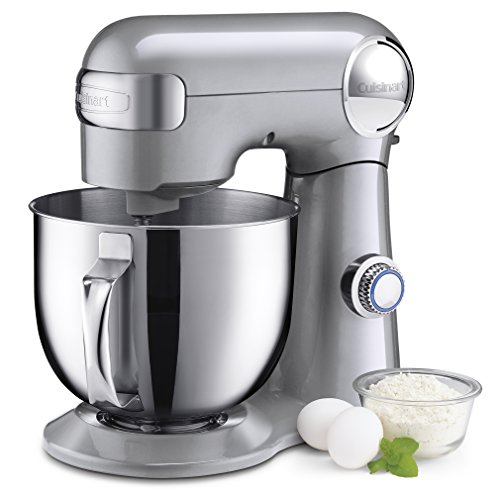
- 500-watt motor with 12 speeds
- 5.5-quart stainless steel bowl
- Includes dough hook and splash guard
Best For: Home bakers who want a versatile mixer for bread dough and general prep
Heavy-Duty Dough Specialist
Bosch Universal Plus 6.5-Quart Mixer Bundle
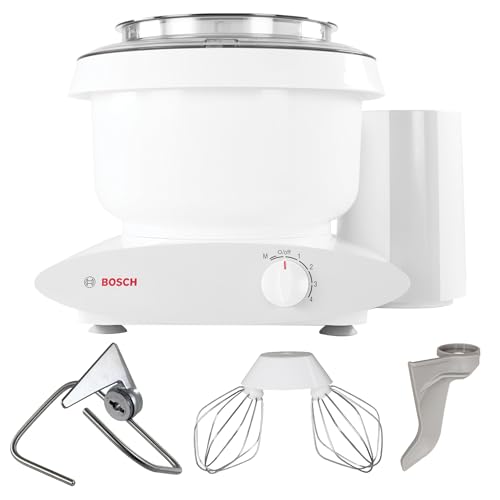
- Kneads up to 14 loaves of bread dough
- 6.5-quart BPA-free bowl
- Includes dough hook extender and whips
Best For: Large-batch bread bakers who need strong kneading capacity
Quiet Power Pick
Honinst 6.5QT 10-Speed Tilt-Head Mixer

- 6.5QT bowl with 10 speeds
- 660-watt pure copper motor
- Listed at under 60 dB noise level
Best For: Home cooks who want a roomy, quieter mixer for bread dough
Compact Budget Option
Hamilton Beach 4-Quart 7-Speed Stand Mixer

- Slow first speed for kneading bread
- Planetary mixing action for bowl coverage
- Light 8-pound mixer with 4-quart bowl
Best For: Bakers who want a compact, affordable mixer for smaller dough batches
Home Baker Pick
VIVOHOME 6-Quart Tilt-Head Mixer

- 660W motor handles heavy doughs
- 6-quart bowl suits family baking
- 10 speeds and dough hook included
Best For: Home bakers needing a versatile mixer for bread and everyday recipes
Bulk Baking Upgrade
ZACME 8.4QT Commercial Stand Mixer

- 8.4-quart bowl handles larger dough batches
- 800W motor and metal gears boost kneading
- Digital timer and 11 speeds add control
Best For: Large-batch bakers and users wanting commercial-style dough performance
Compact Pick
Small 3.2Qt Stand Mixer for Bread Dough
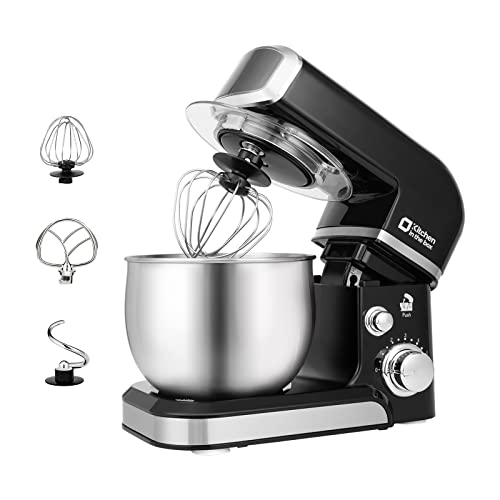
- 3.2-quart bowl suits smaller batches
- 6 speeds with included dough hook
- Lightweight body with suction-cup stability
Best For: Small kitchens and occasional bread dough mixing
Heavy-Duty Pick
6.5Qt Heavy Duty Stand Mixer for Dough

- Pure copper motor for high-torque kneading
- 6.5-quart bowl fits family-size batches
- 63-point planetary mixing for even results
Best For: Frequent bread and pizza dough baking
Versatile Pick
5.3Qt Stand Mixer with 12 Speeds
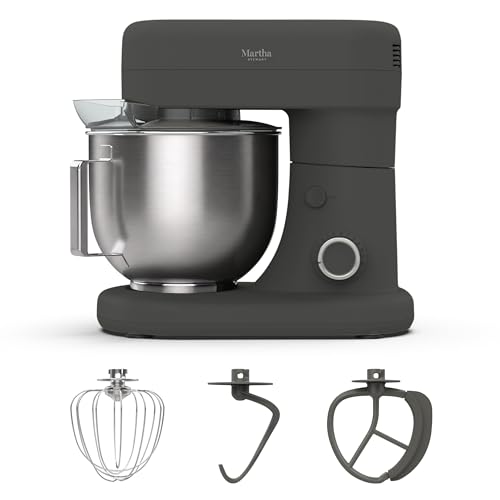
- 5.3-quart bowl handles bigger batches
- 12 speeds for precise mixing control
- Includes dough hook and splash shield
Best For: General home baking with regular dough mixing
Reliable All-Rounder – Cuisinart 5.5-Quart 12-Speed Stand Mixer
If you want a stand mixer for bread dough that can also handle everyday baking jobs, this Cuisinart model is a practical middle-ground pick. Its 500-watt motor, 5.5-quart stainless steel bowl, and dough hook give you the basic power and capacity needed for mixing and kneading home bread recipes without jumping to a commercial-style machine.
Best For: Home bakers who want a versatile stand mixer with enough capacity for regular bread dough and other kitchen prep.
Pros:
- 500-watt motor and 12 speeds offer useful control for different mixing tasks.
- 5.5-quart polished stainless steel bowl gives you solid batch capacity.
- Includes dough hook, chef’s whisk, flat mixing paddle, and splash guard.
- Tilt-back head and optional attachment outlet add convenience and flexibility.
Cons:
- Only one included dough attachment, so heavy bread work is less specialized than a dedicated dough-focused mixer.
- At 17 pounds, it is not the lightest option to move around.
This is a well-rounded stand mixer for bread dough if you want dependable basic performance plus enough flexibility for cookies, whisking, and optional accessories later on.
Heavy-Duty Dough Specialist – Bosch Universal Plus 6.5-Quart Mixer Bundle
For serious bread baking, this stand mixer for bread dough stands out because it is built around high-volume kneading. The Bosch Universal Plus uses a belt-driven transmission and a 500-watt motor, and the supplied notes say it can knead up to 14 loaves of whole grain bread dough, making it a strong choice when dough performance matters most.
Best For: Bakers who make large batches of bread dough and want a mixer designed for heavy kneading.
Pros:
- Can knead up to 14 loaves or 15 pounds of whole grain bread dough.
- 6.5-quart BPA-free bowl with easy-grip handle is dishwasher safe.
- Bottom-drive design makes adding ingredients easier.
- Includes wire whips, dough hook, bowl, lid, splash ring, and dough hook extender.
Cons:
- Only 4 speeds, so it offers less speed granularity than some competitors.
- Plastic bowl construction may feel less premium than metal bowls.
If your top priority is bread dough capacity and kneading strength, this Bosch is the most purpose-built option in the group. It is especially appealing for batch baking and whole-grain dough work.
Quiet Power Pick – Honinst 6.5QT 10-Speed Tilt-Head Mixer
This stand mixer for bread dough aims to balance power, capacity, and everyday convenience. With a 6.5QT bowl, 10-speed control, and a pure copper motor, it gives home bakers a roomy setup for kneading dough while also handling cakes, pizza dough, and other standard mixing jobs.
Best For: Home cooks who want a larger-capacity mixer with quieter operation and simple tilt-head convenience.
Pros:
- 6.5QT bowl and 10 speeds provide room and control for baking tasks.
- Pure copper motor and 660-watt rating support strong mixing performance.
- Noise level is listed at under 60 dB for quieter use.
- Includes dough hook, whisk, and beater with ETL certification.
Cons:
- Plastic construction may not feel as heavy-duty as metal-bodied mixers.
- Details note a manual control style, which keeps it simpler but less advanced than pricier models.
For bakers who want a practical bread dough mixer without a bulky commercial feel, this Honinst model offers a useful mix of size, speed options, and quieter operation.
Compact Budget Option – Hamilton Beach 4-Quart 7-Speed Stand Mixer
If you need a smaller stand mixer for bread dough, this Hamilton Beach model covers the basics at a more compact size. It has a 300-watt motor, planetary mixing action, and a slow first speed that is specifically described as useful for kneading bread and reducing splatter.
Best For: Bakers who want an affordable, compact mixer for smaller dough batches and everyday baking.
Pros:
- Slow first speed is designed for kneading bread and reducing splatter.
- Planetary mixing action helps with full bowl coverage.
- Includes splash guard, dough hook, whisk, and flat beater.
- 4-quart bowl and 8-pound weight make it easier to store and move.
Cons:
- Smaller 4-quart capacity is less suited to large bread batches.
- 300-watt motor is the least powerful in this group.
This is the most space-conscious choice here, and it makes sense if you bake bread occasionally rather than in large quantities. It gives you the core dough-mixing features without taking over the counter.
Home Baker Pick – VIVOHOME 6-Quart Tilt-Head Mixer
If you want a stand mixer for bread dough that can handle everyday family baking without taking up commercial-level space, this VIVOHOME 6-quart model is a practical fit. Its 660W motor, 10 speeds, and included dough hook give you enough power and control for kneading yeast dough, while the planetary mixing action helps keep results even.
Best For: Home bakers who want a mid-size mixer for bread, cakes, and batch baking for 2-4 people.
Pros:
- 660W motor is built to handle heavy doughs without hand-kneading.
- 6-quart bowl can make up to 3 loaves of bread or 2.2 lbs of flour.
- 10 speed settings cover kneading, mixing, and whipping.
- Tilt-head design and splash guard make loading ingredients easier.
Cons:
- 6-quart capacity may be small for very large or commercial batches.
- ABS/steel build is less heavy-duty than commercial die-cast mixers.
Overall, this is a solid everyday bread dough mixer if you value a manageable size, easy cleanup, and enough power for regular home baking. It is best suited to bakers who want versatility more than maximum batch capacity.
Bulk Baking Upgrade – ZACME 8.4QT Commercial Stand Mixer
For serious bread dough work, this stand mixer for bread dough is built around capacity and durability. The 8.4-quart bowl, 800W DC motor, metal gears, and 11 speed settings are aimed at larger dough loads, while the planetary mixing action and included dough hook support thorough kneading.
Best For: Large families, bulk bakers, and home users who want commercial-style performance for dough-heavy jobs.
Pros:
- 8.4-quart bowl and 3 kg dough limit support large batches.
- 800W motor with metal gears is designed for high-intensity kneading.
- 11 speed settings and digital timer add control and convenience.
- Runs at low noise levels compared with many heavy-duty mixers.
Cons:
- At 33 pounds, it is much heavier than compact home mixers.
- Its size may be more than needed for small, occasional baking tasks.
This model stands out if you regularly make multiple loaves, pizza dough, or other large dough batches and want a mixer that feels closer to commercial equipment. The NSF/ANSI 8-2023 mention also makes it appealing for buyers who want a more professional-use design.
Power Pick – FEST 8.45QT High-Power Stand Mixer
If your priority is raw mixing strength in a stand mixer for bread dough, this FEST model is built to make dense batches feel easier. The 1500W copper motor, 8.45-quart bowl, and dough hook are positioned for heavy doughs like brioche, pizza dough, and artisan bread, while the 6-speed control plus pulse gives you straightforward adjustment.
Best For: Bakers who want strong motor power and a large bowl for bread, pizza dough, and big home baking projects.
Pros:
- 1500W motor is the most powerful option in this group.
- 8.45-quart stainless-steel bowl supports large recipes.
- Dough hook, whisk, and beater cover a wide range of tasks.
- Anti-slip suction feet help keep the mixer stable while running.
Cons:
- Only 6 speeds, so fine-tuning is less granular than 10- or 11-speed models.
- ABS housing is less premium than metal-bodied mixers.
This is a strong choice if you want maximum motor power and a roomy bowl for heavier baking sessions. It is especially appealing for bread-focused users who prefer a simple control layout and a large-capacity machine.
Compact Pick – Small 3.2Qt Stand Mixer for Bread Dough
If you want a stand mixer for bread dough but need something compact, this 3.2-quart Kitchen in the box model is built for smaller kitchens and lighter everyday baking. It includes a dough hook, six speeds, and anti-slip suction cups, so it can handle basic dough mixing without taking over your counter space.
Best For: Small kitchens, apartments, couples, and new bakers who want a compact mixer for occasional bread dough.
Pros:
- Lightweight 7-pound design with a small footprint for easy storage
- 6 speeds plus a dough hook for mixing bread dough, batters, and cream
- Tilt-head design and splash lid make ingredient access and cleanup easier
- Four suction cups help keep the mixer steady during use
Cons:
- 3.2-quart bowl is better for smaller batches than large family baking
- 300-watt motor is modest compared with heavier-duty mixers
Overall, this is a practical entry-level choice if your bread dough needs are occasional and your kitchen space is limited. It covers the basics well, but bakers making larger or heavier dough batches will likely want a bigger bowl and more power.
Heavy-Duty Pick – 6.5Qt Heavy Duty Stand Mixer for Dough
This stand mixer for bread dough is aimed at home bakers who want stronger kneading performance and a larger bowl. Its pure copper motor, 6.5-quart stainless steel bowl, and 63-point planetary mixing are designed to handle thick doughs more thoroughly and with less stopping to scrape the sides.
Best For: Bakers who make bread, pizza dough, and other heavy mixtures in family-sized batches.
Pros:
- Pure copper motor is built for high-torque kneading of heavy bread and pizza dough
- 6.5-quart bowl is sized for family batches
- 10 speeds plus pulse mode give precise control across different recipes
- 63-point planetary mixing helps blend ingredients evenly from edge to bottom
Cons:
- At 300 watts, the published wattage is not especially high for a heavy-duty model
- Larger footprint may be less convenient for very small kitchens
For dough-focused baking, this model stands out for its combination of bowl size, kneading support, and mixing coverage. It looks like the strongest fit here if bread and pizza dough are a regular part of your kitchen routine.
Versatile Pick – 5.3Qt Stand Mixer with 12 Speeds
If you want a stand mixer for bread dough with more speed control and a mid-sized bowl, this Martha Stewart model is a balanced option. The 5.3-quart stainless steel bowl, dough hook, and 12 speed settings make it a versatile pick for dough, batter, and whipping tasks in everyday home baking.
Best For: Bakers who want a versatile mixer for bread dough and other mixed baking jobs in a medium-size kitchen.
Pros:
- 5.3-quart bowl handles larger batches, including dough and cookies
- 12 speed settings provide fine control for folding, mixing, and thick doughs
- Includes dough hook, whisk, and flat beater with silicone edge
- Removable splash shield helps reduce mess while adding ingredients
Cons:
- Not as compact as the smallest mixers for tight storage spaces
- Designed for general baking versatility rather than heavy-duty dough specialization
This is a well-rounded option if you want one mixer to cover bread dough and a wide range of baking tasks. It offers useful capacity and speed control without moving all the way into oversized, pro-style territory.
How We Picked the Best Stand Mixer for Bread Dough
We prioritized mixers that are well suited to dense dough, not just light batters. That means looking at motor strength, bowl size, dough hook design, speed control, stability, and included accessories. We also considered whether each Stand Mixer for Bread Dough appears practical for regular home baking, from compact kitchens to larger batch needs.
Build quality mattered too. A good mixer should resist overheating, keep consistent contact with the dough, and feel stable during longer kneading cycles. Features like splash guards, tilt-head convenience, and planetary mixing were treated as helpful bonuses, not substitutes for core kneading performance.
Quick Comparison
For the best all-around experience, look for a mid- to large-capacity mixer with multiple speeds and a sturdy dough hook. Smaller 3- to 4-quart models can work for occasional baking or smaller dough batches, while 6-quart-and-up machines are better if you bake weekly or make multiple loaves at once. Commercial-style models are the best fit for frequent, heavy dough use.
Key Buying Factors for a Stand Mixer for Bread Dough
Motor Strength and Torque
Bread dough stresses a mixer more than most recipes. Higher wattage can help, but torque and gear design matter just as much. A powerful motor that maintains speed under load is more important than peak wattage alone.
Bowl Capacity
Match capacity to your typical batch size. A 5 to 6.5-quart bowl is a strong sweet spot for most home bakers. Larger bowls are useful for big family batches, while smaller bowls may be fine if you make dough occasionally and in smaller quantities.
Dough Hook and Mixing Action
A well-shaped dough hook should fold and stretch dough efficiently without leaving dry flour at the bottom. Planetary mixing helps reach more of the bowl, which can improve consistency and reduce the need to scrape manually.
Speed Control and Stability
Multiple low and medium speeds are important for gradually developing gluten. A stable base, suction feet, or heavier construction can help prevent walking or vibration during kneading.
Ease of Cleaning and Extras
Removable bowls, dishwasher-safe parts, splash guards, and easy-access controls make a difference if you bake often. Extra attachments are useful, but they should not outweigh dough performance.
Who Should Buy Which Stand Mixer for Bread Dough?
If you bake bread occasionally, a smaller or mid-size mixer may be enough. If you knead dough every week, choose a larger-capacity model with a stronger motor and solid construction. For high-volume baking or tougher doughs, a commercial-style mixer is usually the safest choice.
If your main goal is a dependable Stand Mixer for Bread Dough, focus on stability, bowl size, and kneading performance first. That approach will narrow the field quickly and help you choose a machine that fits both your recipes and your kitchen.