The best variable speed belt sanders give you more control than single-speed models, making it easier to remove stock quickly or slow down for delicate finishing, sharpening, and heat-sensitive materials.
We selected 10 options ranging from compact handheld and detail sanders to benchtop belt-disc combinations and heavy-duty belt grinders. Use the guide below to match belt size, speed range, power, and machine format to your projects.
Best 10 Variable Speed Belt Sanders Picks for 2026
Best Compact Pick
WEN HB321V Variable Speed Belt Sander

- 620–1,200 FPM variable speed
- Lightweight 6.4-pound design
- Dust bag and quick belt changes
Best For: Portable DIY and general-purpose sanding
Best Bench Versatility
GOLDSAND Variable-Speed Belt Grinder

- Stepless VFD speed control
- Vertical and horizontal modes
- Three included grits: 100/180/240
Best For: Metal grinding, polishing, and knife sharpening
Best Handheld-to-Bench Combo

- 10-amp motor with 660–1,310 FPM control
- Converts to benchtop use
- 4-by-24-inch belt and two included belts
Best For: Larger sanding jobs needing handheld or stationary use
Best Metalworking Combo
BUCKTOOL 2x42-Inch Belt Sander
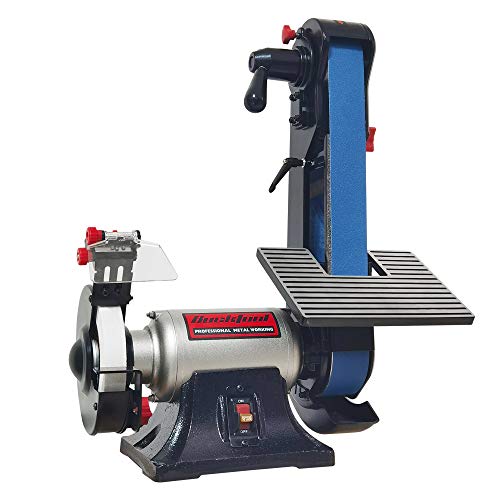
- Belt sander and 6-inch grinder combo
- 0–90-degree belt tilt
- Quick belt changes and dual worktables
Best For: Knife making and workshop metalworking
Best Detail Sander
WEN 6307 Variable-Speed File Sander
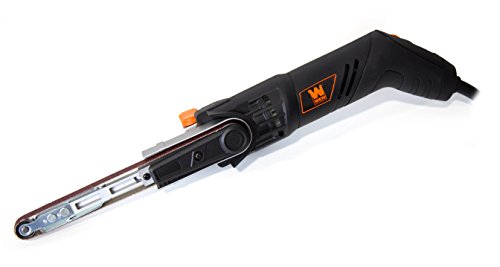
- 1,080–1,800 FPM variable speed
- 55-degree pivoting 1/2-inch belt
- Auto-tracking and tool-free belt changes
Best For: Detail sanding, edge shaping, and tight spaces
Best Heavy-Duty Metalworking Option
VEVOR 72-Inch Variable-Speed Grinder

- 1,500W motor with VFD speed control
- Three circular, arc, and flat grinding modes
- Includes three 2-by-72-inch sanding belts
Best For: Metalworking, knife making, and stationary grinding
Best Benchtop Combo
Variable-Speed 1x30 Belt and 6-Inch Disc Sander

- Belt and disc sanding in one machine
- Separate variable speed ranges
- Adjustable tables with miter gauge
Best For: Versatile wood, metal, sharpening, and shop work
Powerful Metalworking Pick

- 550W motor with VFD speed control
- Includes 100/180/240 grit belts
- Vertical and horizontal grinding positions
Best For: Knife making, metal polishing, and compact workshop grinding
Best Woodworking Combo
Variable Speed Belt Disc Sander

- 4 x 36-inch belt and 6-inch disc
- Adjustable belt and disc speeds
- Horizontal or vertical belt operation
Best For: DIY woodworking, edge shaping, and finishing
Precision Knife-Making Choice

- Forward and reverse belt direction
- Includes KSAG-5 angle guide
- VFD control with all-steel construction
Best For: Precision bevel grinding, sharpening, and knife making
Best Compact Pick – WEN HB321V Variable Speed Belt Sander
WEN 7.5-Amp 3-by-21-Inch Variable Speed Handheld Portable Belt Sander (HB321V)
Check Price On AmazonThe WEN HB321V is a practical choice among variable speed belt sanders for portable, general-purpose sanding. Its 7.5-amp motor adjusts from 620 to 1,200 feet per minute, while the compact 6.4-pound design helps limit fatigue during longer jobs.
Best For: DIYers and woodworkers who want a lightweight corded sander with adjustable speed and straightforward dust collection.
Pros:
- Variable speed range of 620–1,200 feet per minute
- Lightweight 6.4-pound design with lock-on switch
- Quick-release belt lever and included 80-grit belt
- Detachable dust bag and 1-1/4-inch dust port
Cons:
- Uses a 3-by-21-inch sanding belt
- Includes one 80-grit belt, limiting the initial grit selection
Choose this model when portability and simple speed control matter more than bench-mounted versatility. The two-year warranty and included dust accessories add convenience for routine projects.
Best Bench Versatility – GOLDSAND Variable-Speed Belt Grinder
This GOLDSAND machine expands the variable speed belt sanders category into bench grinding and polishing. Its VFD control provides stepless speed adjustment, while the 30-by-1-inch belt can operate in vertical or horizontal positions for different work angles.
Best For: Metalworkers, knife sharpeners, and workshop users who need adjustable-speed grinding, polishing, and deburring.
Pros:
- Stepless speed regulation through a VFD control system
- Vertical and horizontal operating positions
- Includes 100-, 180-, and 240-grit belts
- Detachable workbench and steel frame support
Cons:
- At 17.4 pounds, it is less portable than handheld models
- Its 1-by-30-inch belt format is specialized
This is the most workshop-oriented option here, particularly for users who value controlled speed and multiple grinding positions. The included grit range also makes it easier to move from coarse work toward finer finishing without immediately buying additional belts.
Best Handheld-to-Bench Combo – WEN HB424V Belt Sander
WEN 10-Amp 4-by-24-Inch Variable Speed Combination Handheld and Benchtop Belt Sander (HB424V)
Check Price On AmazonThe WEN HB424V is a strong option among variable speed belt sanders when you want both handheld and stationary use. Its 10-amp motor runs from 660 to 1,310 feet per minute, and the included mounting hardware lets it attach to a benchtop for upward-facing sanding.
Best For: Woodworkers who want a larger 4-by-24-inch sanding surface with the flexibility to switch between portable and bench-mounted operation.
Pros:
- Powerful 10-amp variable-speed motor
- Handheld and benchtop configurations
- Includes two 80-grit belts, mounting clamps, and rubber pad
- Dust bag, 1.2-inch dust port, and lock-on switch included
Cons:
- Larger belt size can be less convenient for compact jobs
- Benchtop use requires mounting to a suitable surface
Pick the HB424V if versatility and sanding capacity are priorities. It offers more motor power and a wider belt than the smaller WEN model, while still retaining adjustable speed and portable operation.
Best Metalworking Combo – BUCKTOOL 2×42-Inch Belt Sander
The BUCKTOOL combines a 2-by-42-inch belt sander with a 6-inch bench grinder for workshop users who need more than a handheld tool. Its belt housing swivels from horizontal to vertical, and the belt can tilt from 0 to 90 degrees for angled sanding.
Best For: Knife making, metalworking, and wood projects that benefit from a belt sander and bench grinder in one machine.
Pros:
- Combined 2-by-42-inch belt sander and 6-inch grinder
- 0–90-degree belt tilt and horizontal-to-vertical adjustment
- Quick-release tension and tracking mechanism
- Two worktables, LED light, and cast-iron base
Cons:
- Uses a fixed 4,480 FPM belt speed rather than variable speed
- Its 24.53-inch height and bench-oriented design take up substantial space
This model is not a variable-speed machine, so it suits shoppers who can trade speed adjustment for a dedicated grinder combination. The dual worktables and multiple belt positions make it especially useful for knife sharpening and workshop fabrication.
Best Detail Sander – WEN 6307 Variable-Speed File Sander
The WEN 6307 is a compact choice among variable speed belt sanders for detail work, edge shaping, and tight areas. Its 1/2-by-18-inch belt pivots up to 55 degrees, while the speed dial adjusts belt speed from 1,080 to 1,800 feet per minute.
Best For: Detail sanding, contour work, and projects where a lightweight, pivoting sanding arm is useful.
Pros:
- Variable speed dial supports 1,080–1,800 feet per minute.
- Pivoting belt reaches up to 55 degrees.
- Auto-tracking belt system requires no tensioning or adjustments.
- Includes three sanding belts, a dust-port attachment, and a two-year warranty.
Cons:
- The narrow 1/2-inch belt is intended for detail work rather than broad surfaces.
- Its 2-amp motor is less suited to heavy stock removal.
Choose this model when maneuverability and easy belt changes matter more than large-area sanding capacity. Tool-free belt installation and the automatic tracking system make it particularly convenient for occasional project work.
Best Heavy-Duty Metalworking Option – VEVOR 72-Inch Variable-Speed Grinder
The VEVOR belt grinder is a heavy benchtop option for shoppers seeking variable speed belt sanders for metalworking, knife making, polishing, and deburring. Its 1,500W motor works with a VFD for stepless speed adjustment, and the machine accepts 2-by-72-inch sanding belts.
Best For: Metal grinding, knife making, polishing, and workshop users who need multiple grinding configurations.
Pros:
- 1,500W pure-copper motor runs at up to 2,900 rpm.
- VFD control enables stepless speed regulation for coarse or fine work.
- Three modes support circular, arc, and flat grinding.
- Includes 100-, 180-, and 240-grit belts.
Cons:
- At 110.7 pounds, it is not a portable sander.
- Its large 33.46-by-11.81-by-18.5-inch frame requires substantial bench space.
- The supplied belt selection is limited to three grits.
This VEVOR is best viewed as a dedicated workshop machine rather than a general-purpose handheld tool. The welded steel frame, thick base, and three grinding modes make it a strong fit for demanding stationary work.
Best Benchtop Combo – Variable-Speed 1×30 Belt and 6-Inch Disc Sander
This belt-and-disc combination machine is a versatile pick among variable speed belt sanders for wood, metal, sharpening, and general shop projects. It combines a 1-by-30-inch belt with a 6-inch disc, offering separate speed ranges and adjustable work tables in one benchtop unit.
Best For: Woodworkers, metalworkers, knife makers, and DIY users who want belt and disc sanding in one machine.
Pros:
- Variable speed ranges from 1,909–3,248 SFPM on the belt and 2,000–3,400 rpm on the disc.
- 3/4 HP direct-drive motor provides torque for both sanding surfaces.
- Adjustable tables and a disc-side miter gauge support angled work.
- Removable belt cover allows round-corner and contour sanding.
Cons:
- The 1-by-30-inch belt offers less sanding area than larger belt-grinder formats.
- Only the belt cover is specifically described as removable for contour work.
Consider this combo when shop versatility and space efficiency are priorities. The belt handles detail and contour tasks, while the disc provides a stable surface for squaring, beveling, and finishing.
Powerful Metalworking Pick – Compact VFD Belt Grinder
If you need variable speed belt sanders for knife making, deburring, or metal polishing, this VEVOR model offers stepless speed adjustment through its VFD. Its compact 1 x 30-inch belt format, included grits, and vertical or horizontal setup make it adaptable for small workshop projects.
Best For: Metalworking, knife making, sharpening, polishing, and compact bench setups.
Pros:
- 550W pure copper motor is designed for stable, durable operation.
- VFD control supports stepless speed adjustment for coarse or fine work.
- Includes 100, 180, and 240 grit belts for varied sanding tasks.
- Supports circular and flat grinding in vertical or horizontal positions.
Cons:
- The 1 x 30-inch belt size is more compact than general-purpose woodworking formats.
- Its specialized grinding design may be less suitable for large surface-sanding jobs.
This is a practical choice when controllable speed and metalworking versatility matter more than a large sanding surface. The reinforced steel body and adjustable working positions add useful flexibility for bench work.
Best Woodworking Combo – Variable Speed Belt Disc Sander
For variable speed belt sanders aimed at woodworking and DIY projects, this Woodskil benchtop combination unit provides both a 4 x 36-inch belt and a 6-inch disc. Adjustable belt and disc speeds help you tailor sanding for edge shaping, finishing, and stock removal.
Best For: Home workshops, woodworking, edge shaping, surface smoothing, and DIY finishing.
Pros:
- Adjustable belt speed ranges from 1060 to 2110 FPM.
- Disc speed adjusts from 2000 to 4000 RPM for added control.
- Combines a 4 x 36-inch belt with a 6-inch disc in one benchtop machine.
- Horizontal or vertical belt operation and a higher work stop support varied tasks.
Cons:
- The 3A motor is positioned for home workshop use rather than heavy industrial work.
- Its benchtop format may limit very large workpieces.
This model stands out for routine woodworking because it combines two sanding surfaces with useful speed adjustment. The higher work stop and two-year limited warranty add practical value for DIY users.
Precision Knife-Making Choice – Reversible 1 x 30 Belt Sander
Among variable speed belt sanders for blade work, this 1 x 30 model focuses on precision control. Its VFD, forward/reverse belt direction, KSAG-5 angle guide, and interchangeable grinding attachments support repeatable bevels, sharpening, contour shaping, and finishing.
Best For: Knife making, bevel grinding, blade sharpening, tool making, and metal fabrication.
Pros:
- Forward and reverse rotation can improve visibility and control for different operations.
- KSAG-5 angle guide helps create consistent bevels.
- VFD provides smooth speed adjustment for stock removal through polishing.
- All-steel construction and interchangeable attachments support demanding workshop use.
Cons:
- The 1 x 30-inch format is specialized and offers less surface area than larger woodworking sanders.
- This focused knife-making design may be more machine than needed for basic household sanding.
This is the most specialized option here for controlled blade shaping and sharpening. Forward/reverse operation, angle guidance, and horizontal or vertical use make it a strong fit for users who prioritize repeatable metalworking results.
How We Picked These Variable Speed Belt Sanders
We compared the selected machines by intended use, belt dimensions, speed adjustability, motor output, work support, and versatility. The list includes handheld sanders for boards and renovation work, narrow detail models for tight areas, benchtop combinations for general shop use, and larger grinders for serious metal shaping or polishing.
We also considered practical features such as horizontal or vertical positioning, included abrasives, disc-sanding capability, tracking adjustment, contact-wheel compatibility, dust management, and the level of setup or safety equipment likely to be required.
Quick Comparison
| Best For | Look For | Typical Format |
|---|---|---|
| General woodworking | 3-by-21- or 4-by-24-inch belt, adjustable speed, comfortable grip | Handheld |
| Detail work | Narrow belt, compact nose, low-speed control | File sander |
| Small-shop versatility | Belt and disc functions, work table, stable base | Benchtop combo |
| Knife sharpening | Fine speed control, platen or contact wheel, suitable fine belts | Narrow belt grinder |
| Metal fabrication | High power, variable-frequency drive, sturdy frame, replaceable tooling | Shop grinder |
Key Buying Factors for Variable Speed Belt Sanders
Speed Range and Control
Variable speed matters because aggressive stock removal, finish sanding, sharpening, and polishing require different belt speeds. A lower setting can reduce heat buildup on thin metal or knife edges, while higher speeds improve productivity on large wood surfaces. Check whether the specification lists belt speed in feet per minute, motor RPM, or both.
Belt Size and Machine Style
Longer, wider belts cover more area and generally suit woodworking. Narrow 1-inch belts provide better access and control for blades, contours, and small parts. Handheld models are portable, while benchtop and floor-standing machines offer better stability and repeatability.
Power, Tracking, and Work Support
Choose motor power according to the material and pressure you expect to apply. A reliable tracking adjustment helps keep the abrasive centered, and a platen, table, miter gauge, or height-adjustable work rest improves control. For metalworking, confirm that the frame and contact-wheel arrangement can handle your intended belt tension and workload.
Safety and Dust Management
Wear eye and hearing protection, use appropriate respiratory protection, and keep sparks away from flammable materials. Wood dust collection is useful, but metal grinding often requires a different cleanup approach. Review guarding, emergency access, belt changes, and the manufacturer’s approved abrasive types before purchase.
Who Should Buy Which Variable Speed Belt Sanders?
Choose a handheld variable-speed model if you mainly smooth boards, doors, countertops, or other large surfaces and need portability. A detail file sander is the better fit for narrow edges, curves, and hard-to-reach areas. Select a belt-disc combo when you want one compact machine for general woodworking and occasional shaping.
For knives and small metal parts, prioritize a narrow belt, low-speed adjustability, stable support, and compatible fine-grit abrasives. If you regularly grind, polish, or fabricate metal, step up to a heavier grinder with stronger drive components, VFD control, and interchangeable tooling. Finally, verify available power, bench space, replacement-belt availability, and the machine’s duty cycle before ordering.