When you need smooth results in corners, cabinets, trim, and other hard-to-reach spots, a full-size sander can be too bulky to control. That’s where compact orbital sanders for tight spaces make a real difference.
Below, we’ve rounded up 10 strong options for detail sanding, edge work, and small-area finishing so you can match the right tool to your project, power preference, and budget.
Best 10 Orbital Sanders for Tight Spaces Picks for 2026
2-in-1 Corner-to-Flat Versatility
2-in-1 Detail Sander & Palm Sander

- Triangular pad reaches corners and edges
- Square pad handles larger flat areas
- Brushless motor with 6 speed levels
Best For: DIYers who want one compact sander for both detail work and flat panels
Long-Reach Filing Control
WEN 6307 Variable Speed Detailing File Sander
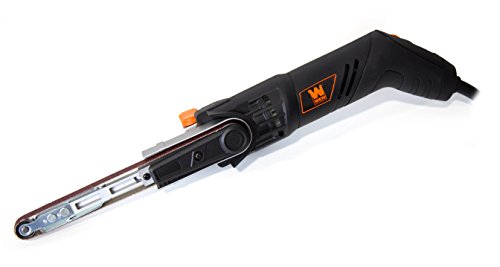
- Narrow 1/2-by-18-inch belt for tight work
- 50° pivot helps with awkward angles
- Variable speed and auto-tracking belt
Best For: Users who need a narrow belt sander for edges, contours, and hard-to-reach spots
Attachment-Driven Detail Control
SKIL Multi-Function Detail Sander
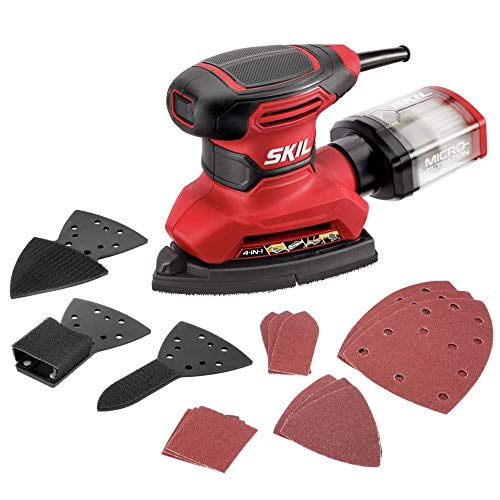
- 4-in-1 setup for corners, edges, and contours
- 13,500 OPM for smooth detail sanding
- Micro-filter dust box plus vacuum port
Best For: Anyone who wants a versatile detail sander with quick-swap attachments for tricky spots
Compact Corner Access
BLACK+DECKER 20V MAX Mouse Sander

- Compact shape fits tight corners and spaces
- Detail finger attachment reaches hard spots
- Dust collection and hook-and-loop sheets
Best For: Small sanding jobs, corners, and detail work where reach matters most
Compact Corded Pick
SKIL 5" Random Orbital Sander for Tight Spots

- Compact size helps it fit tight spaces.
- 2.8 amp motor reaches 13,000 OPM.
- Variable speed and dust box add control and convenience.
Best For: DIY users who need a compact corded sander for smaller spaces and general sanding
Detail Work Pick
GALAX PRO Cordless Detail Sander for Corners
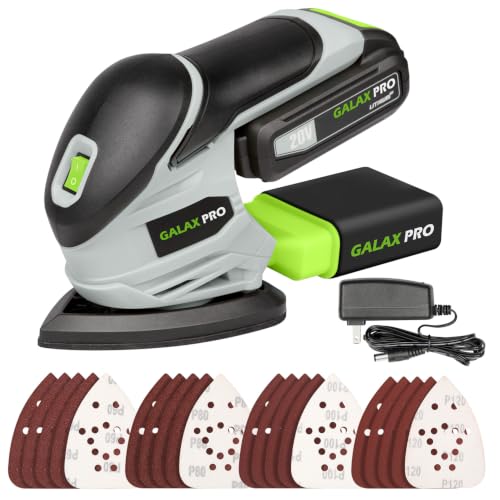
- Mouse-shaped head is built for tight corners and edges.
- Cordless design improves reach and portability.
- Includes 20 sandpaper sheets in four grits.
Best For: Users who need a cordless detail sander for corners, edges, and refinishing
Low-Profile Corded Pick
DEWALT 5" Orbital Sander Kit with Short Height
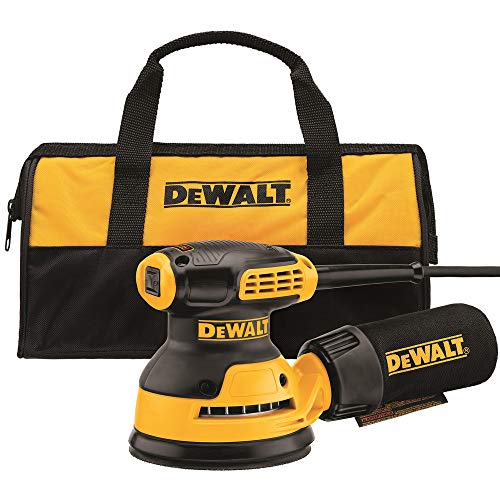
- Shorter height helps you work closer to the surface.
- 3 amp motor spins at 12,000 OPM.
- Counterweight design and dust collection improve comfort and cleanup.
Best For: Woodworkers and DIYers who want a low-profile corded sander for closer access
Compact Power Sander
DongCheng 5-Inch Random Orbital Sander
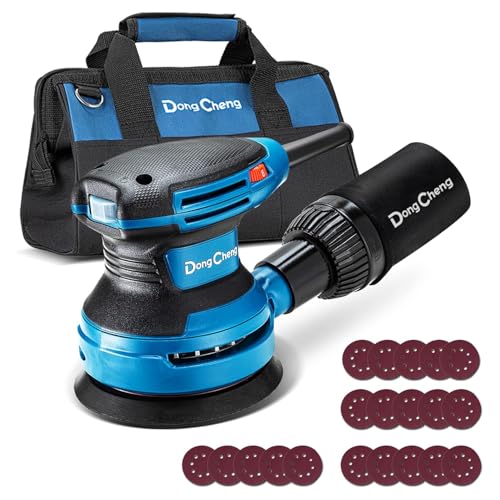
- 380W motor with 6 speed settings
- Compact grip helps with controlled sanding
- Dust box and vacuum compatibility
Best For: Controlled sanding in compact work areas with solid all-around power
Detail Corner Specialist

- Compact shape is made for tight spaces
- Detail finger attachment reaches awkward spots
- 3-position grip adds control and comfort
Best For: Corners, trim, and other precision sanding jobs
Cordless Low-Profile Sander

- Low-profile shape helps in close quarters
- Cordless design improves maneuverability
- Variable speed and dust collection included
Best For: Portable sanding where low-profile access matters
2-in-1 Corner-to-Flat Versatility – 2-in-1 Detail Sander & Palm Sander
If you’re shopping for orbital sanders for tight spaces, this 2-in-1 model stands out because it switches between a triangular pad for corners and edges and a square pad for larger flat areas. That makes it a practical pick for detail work, furniture refinishing, and paint removal when you want one compact tool to handle both narrow spots and broader surfaces.
Best For: DIYers who want one compact sander for corners, edges, and flat panels.
Pros:
- Interchangeable triangular and square pads for detail areas and flat surfaces
- Brushless 350W motor is built for lower noise, less vibration, and longer life
- Six speed levels plus a top paddle trigger for more control
- Built-in dust collection with 28mm/35mm vacuum compatibility
Cons:
- More of a multi-use detail sander than a specialized ultra-compact spot tool
- Corded design may limit movement in very tight or awkward work areas
This is a strong all-around option if you need tight-space access without giving up usefulness on larger surfaces. The pad swap design and variable speeds make it flexible for many home woodworking jobs.
Long-Reach Filing Control – WEN 6307 Variable Speed Detailing File Sander
For orbital sanders for tight spaces, a file sander can be useful when you need a narrow sanding profile and a pivoting belt for awkward angles. This WEN model uses a 1/2-by-18-inch belt with variable speed and a 50° pivot range, which makes it well suited to edge work, contours, and other narrow sanding tasks.
Best For: Users who need a narrow belt sander for edges, contours, and hard-to-reach spots.
Pros:
- 1/2-by-18-inch belt is narrow enough for detailed work
- 50° pivot range helps match different sanding angles
- Variable speed dial adds control from 1080 to 1800 feet per minute
- Auto-tracking belt system and tool-free changes simplify use
Cons:
- It is a file sander, so it is less versatile than a standard detail orbital sander
- Best suited to edge and contour work rather than broad surface sanding
This is a specialized choice for users who care more about accessing awkward shapes than covering big surfaces. The pivoting belt and narrow footprint make it a practical tool for focused sanding jobs.
Attachment-Driven Detail Control – SKIL Multi-Function Detail Sander
When comparing orbital sanders for tight spaces, this SKIL detail sander is appealing because it comes with multiple attachments for corners, edges, and surface contours. Its 4-in-1 setup, compact body, and high orbit speed make it a practical choice for sanding in small areas where flexibility matters more than raw size.
Best For: Anyone who wants a versatile detail sander with quick-swap attachments for tricky spots.
Pros:
- 4-in-1 design includes attachments for corners, edges, and contours
- 13,500 orbits per minute for smooth sanding performance
- Micro-filtration box and vacuum port help manage dust
- Soft rubber grip and low-vibration design improve comfort
Cons:
- Smaller detail format is not meant for fast coverage on large panels
- Some users may prefer a more specialized shape for very narrow access
This model offers one of the more flexible feature sets in the group, especially if your projects mix flat areas with shaped or cramped spaces. It is a sensible option for homeowners who want a detail sander that can adapt quickly.
Compact Corner Access – BLACK+DECKER 20V MAX Mouse Sander
If you want orbital sanders for tight spaces that prioritize control, this BLACK+DECKER mouse sander is built around a compact shape for corners and hard-to-reach areas. It also includes a detail finger attachment, which helps it fit into especially narrow spots where a larger sander would be awkward.
Best For: Small sanding jobs, corners, and detail work where reach matters most.
Pros:
- Compact ergonomic design helps with control in tight corners and spaces
- Detail finger attachment extends usefulness in hard-to-reach areas
- Dust collection helps keep the work surface cleaner
- Hook-and-loop paper changes are quick and simple
Cons:
- Tool-only purchase means battery and charger are sold separately
- Best suited to detail work rather than larger sanding tasks
This is a straightforward choice if accessibility is your top priority. The compact form and interchangeable detail finger make it especially practical for touch-ups and other small sanding jobs.
Compact Corded Pick – SKIL 5" Random Orbital Sander for Tight Spots
SKIL 5” Random Orbital Sander with Cyclonic Dust Box & 3pc Sanding Sheet - SR211601, Multicolor
Check Price On AmazonIf you want orbital sanders for tight spaces, this SKIL 5-inch model is a practical corded option with a compact body and ergonomic grip. Its 2.8 amp motor and variable speed control give you enough versatility for everyday sanding, while the low-vibration design helps keep control more comfortable during longer sessions.
Best For: DIY users who want a compact random orbital sander for smaller areas, edges, and general sanding jobs.
Pros:
- Compact size is designed to get into tight spaces easily.
- 2.8 amp motor and 13,000 OPM support smooth sanding performance.
- Variable speed control adds flexibility across different materials.
- Dust box and dust-sealed switch help keep cleanup and maintenance simpler.
Cons:
- Corded design limits mobility compared with battery-powered models.
- Best suited to general sanding rather than very detailed corner work.
For buyers who want a straightforward orbital sander that can handle tighter areas without feeling oversized, this SKIL model is a strong all-around pick. It balances comfort, control, and dust handling in a compact package.
Detail Work Pick – GALAX PRO Cordless Detail Sander for Corners
For orbital sanders for tight spaces, this GALAX PRO cordless detail sander is built around a mouse-shaped head that can reach narrow edges, corners, and intricate spots. The compact form, soft rubber handle, and 12,000 RPM motor make it a useful choice when you need precise one-handed control on furniture, cabinets, or woodworking details.
Best For: Users who need a cordless detail sander for corners, edges, and fine finishing work.
Pros:
- Mouse-shaped head is engineered for tight corners and narrow edges.
- Cordless design improves portability and maneuverability.
- Comes with 20 sanding sheets in multiple grits for different tasks.
- Dust collection bag and dust-sealed switch help support cleaner operation.
Cons:
- 1.3Ah battery is included, which may be better suited to lighter-duty jobs.
- Designed for detail sanding, not larger surface removal.
This is the most specialized option here if your main goal is reaching awkward spaces rather than covering big panels. The included accessories and compact shape make it especially useful for detailed refinishing projects.
Low-Profile Corded Pick – DEWALT 5" Orbital Sander Kit with Short Height
If you’re comparing orbital sanders for tight spaces, this DEWALT kit stands out for its shorter height, which helps you get closer to the workpiece. The 3 amp motor and 12,000 OPM provide solid sanding power, while the reduced vibration design and rubber over-mold make it a comfortable choice for controlled finishing.
Best For: Woodworkers and DIYers who want a low-profile corded orbital sander for getting closer to the work surface.
Pros:
- Shorter height helps the user get closer to the workpiece.
- 3.0 amp motor and 12,000 OPM offer reliable sanding performance.
- Separate counterweight design reduces vibration for better comfort.
- Improved dust collection and dust-sealed switch support cleaner use.
Cons:
- Corded setup means less freedom than a battery-powered sander.
- 5-inch format is still a general-purpose sander, not a dedicated detail tool.
This DEWALT model makes sense if you want a familiar orbital sander with a lower profile rather than a specialized detail tool. It’s a strong option for users who value stability, comfort, and close access to the work surface.
Compact Power Sander – DongCheng 5-Inch Random Orbital Sander
If you want orbital sanders for tight spaces but still need the speed to cover bigger panels, this DongCheng 5-inch random orbital sander is a practical middle ground. Its compact body, ergonomic rubber grip, and 6-speed control make it easier to manage in awkward sanding positions while still delivering strong material removal for wood and metal work.
Best For: Users who want a compact corded orbital sander with enough power for detail work and general surface sanding.
Pros:
- 380W motor with 8,000-12,800 OPM and 6 variable speeds
- Compact, balanced design with an ergonomic rubber handle for better control
- Dust box plus dust-sealed switch, and it can connect to a vacuum
- Includes 20 sanding sheets and a heavy-duty tool bag
Cons:
- 5-inch pad is better for coverage than ultra-tight corners
- Corded design limits mobility compared with battery models
- At 3.3 pounds, it is not the lightest option here
Overall, this is a solid pick if you want a capable orbital sander that stays controllable in confined areas without giving up power. It is especially appealing when you need one tool for sanding, polishing, and general woodworking prep.
Detail Corner Specialist – BLACK+DECKER Detail Sander
For orbital sanders for tight spaces, a detail sander like this BLACK+DECKER model is built for the job. Its compact design, detail finger attachment, and odd-angle sanding pad are meant to reach cramped corners, trim edges, and other hard-to-access spots where a full-size sander is awkward.
Best For: Detail sanding in corners, edges, and other cramped areas where precision matters most.
Pros:
- Compact body is designed for cramped corners and tight spaces
- Detail finger attachment helps reach hard-to-access spots
- 3-position grip improves control and reduces fatigue
- Dust collector and dust-sealed switch support cleaner, more durable use
Cons:
- 1.2 amp motor is less powerful than larger orbital sanders
- Best suited to detailed work, not broad surface sanding
- Corded design means you need to work within outlet range
This is the most space-focused option in the group and makes sense when reach matters more than speed or coverage. If your work is mostly corners, trim, and awkward edges, the compact shape is the main advantage.
Cordless Low-Profile Sander – DEWALT 20V MAX Orbital Sander
DEWALT 20V MAX Orbital Sander, Tool Only (DCW210B) | Brushless motor, dust collection
Check Price On AmazonIf you are comparing orbital sanders for tight spaces, this DEWALT 20V MAX stands out for its low-profile height and cordless convenience. The brushless motor, variable speed range, and rubber overmold grip give it the control needed for close-in sanding while keeping movement unrestricted around the workspace.
Best For: Cordless sanding where low profile access and easy maneuverability are important.
Pros:
- Low-profile height helps you get close to the work surface
- Brushless motor and 8,000-12,000 OPM variable speed
- Cordless design improves movement in cramped work areas
- Dust port and locking dust bag support cleaner sanding
Cons:
- Tool only, so battery and charger are not included
- Still a 5-inch random orbital sander, not a true detail sander
- Vacuum adapters may require separate accessories
This is a strong choice if you want a portable sander that can work comfortably in tighter spots without the hassle of a cord. It is more versatile than a detail sander, but less specialized for tiny corners.
How We Picked These Orbital Sanders for Tight Spaces
We focused on tools that are easier to maneuver in confined areas, with compact bodies, detail-friendly sanding profiles, and practical dust collection. We also looked at speed control, power source, attachment variety, and how well each sander fits common tasks like finish prep, paint removal, and touch-up work.
For Orbital Sanders for Tight Spaces, comfort matters as much as raw power. A lighter tool with a stable grip and good visibility can be more useful than a larger sander that feels awkward around edges or inside cabinets.
Quick Comparison: Which Type Works Best?
Detail sanders are usually the best choice for corners, trim, and narrow surfaces. Mouse-style sanders excel where precision matters most. Compact random orbital sanders are better when you need a smoother finish over slightly larger areas, while cordless models offer more freedom in places without easy outlet access.
Key Buying Factors for Orbital Sanders for Tight Spaces
Shape and Sanding Footprint
Look for a pointed or narrow pad if you plan to sand inside corners, along rails, or around hardware. A smaller foot gives you more control, but it may cover less surface area per pass.
Speed Control and Power
Variable speed is valuable because delicate finishing and aggressive material removal require different settings. Higher OPM can help with faster sanding, but control is more important than maximum speed for detailed work.
Dust Collection
Good dust collection improves visibility and keeps the work area cleaner. This is especially useful when sanding cabinetry, furniture, or indoor trim where cleanup matters.
Comfort and Grip
Since tight-space sanding often means awkward angles and longer hand contact, choose a model with a comfortable grip and manageable vibration. A tool that feels balanced will be easier to guide accurately.
Corded Vs. Cordless
Corded sanders are usually better for extended sessions and consistent power. Cordless sanders offer convenience and mobility, which is helpful for quick jobs, jobsite work, or areas without nearby power.
Who Should Buy Which Orbital Sanders for Tight Spaces?
If you mainly work on furniture, trim, or cabinet detail, a compact detail sander is likely the best fit. If you want a broader-purpose tool that still handles confined areas well, a small random orbital sander is a smart choice. For frequent touch-ups and portability, cordless models make sense, while corded tools are better for longer, more demanding sanding sessions.
In short, the best option depends on where you sand most often and how much control you need. Choose the smallest tool that still gives you the grip, speed, and dust control required for the job.