The best handheld belt sanders remove material quickly while still giving you enough control for flattening boards, smoothing edges, shaping projects, and preparing surfaces for finishing.
This roundup compares 10 options across corded, cordless, pneumatic, full-size, and detail-sanding designs so you can match the tool to your workload, workspace, and preferred power source.
Best 10 Handheld Belt Sanders Picks for 2026
Best Quiet Variable-Speed Pick
Makita 9903 3" x 21" Belt Sander

- 8.8-amp motor with variable speed
- Auto-tracking belt system
- Flush-sanding design and front grip
Best For: Corded wood sanding with speed control and edge access
Best Compact Cordless Detail Pick
DEWALT 20V MAX XR Cordless Bandfile

- Brushless motor reaches 5,600 feet per minute
- 104-degree rotating arm
- Tool-free belt and changeable contact arm
Best For: Focused cordless detail sanding and band-file applications
Best Beginner-Friendly Corded Pick
SKIL 6 Amp 3" x 18" Belt Sander

- Pressure control warns against excess force
- Micro-filtration and vacuum compatibility
- Auto-track belt and flush-edge sanding
Best For: DIY wood sanding with simple control and dust management
Best Cordless Full-Size Pick
DEWALT 20V MAX Brushless Belt Sander

- Brushless cordless motor for larger jobs
- 25-speed dial and variable-speed trigger
- Tool-free belt changes and dust collection
Best For: Demanding cordless sanding with adjustable speed and dust control
Best Variable-Speed Pick
WEN HB321V 3-by-21-Inch Belt Sander

- 7.5-amp motor with 620–1,200 FPM variable speed
- 6.4-pound design helps reduce fatigue
- Includes dust bag, dust port, and 80-grit belt
Best For: General woodworking with adjustable sanding speed
Best Pneumatic Option
Ingersoll Rand 360-418 Air Belt Sander

- 0.6-hp motor with up to 20,000 rpm
- Lightweight 2.4-pound right-angle design
- Includes three grits and tool-free adjustments
Best For: Air-powered metalworking and industrial finishing
Best Starter Bundle
Jellas 7-Amp 3-by-21-Inch Belt Sander
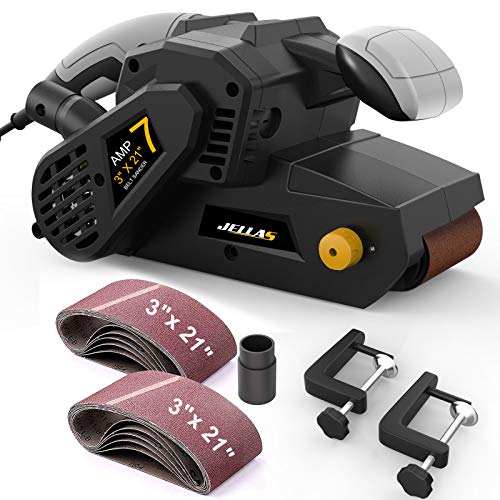
- Includes 10 belts from 40 to 180 grit
- Converts to bench use with included C clamps
- Features variable speed and dust-bag collection
Best For: DIY woodworking and varied sanding projects
Best Angled-Belt Option
CRAFTSMAN 7-Amp 3-in. x 21-in. Belt Sander

- Angled belt reaches closer to adjoining surfaces
- 800 fpm supports fast material removal
- Tool-free belt release and dust bag included
Best For: General woodworking and edge-adjacent sanding
Best Detail Pick
WEN 6307 Variable-Speed File Sander
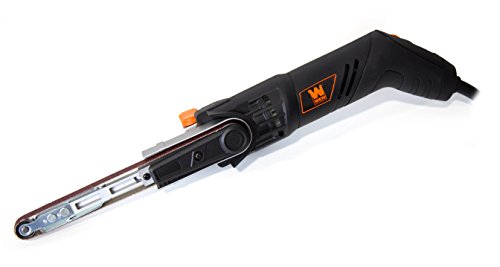
- Narrow 1/2-inch belt suits detail work
- Belt pivots up to 55 degrees
- Variable speed and auto-tracking improve control
Best For: Narrow surfaces and angled detail sanding
Best Handheld-to-Benchtop Combo
WEN 10-Amp 4-in. x 24-in. Sander

- Converts from handheld to benchtop use
- 10-amp variable-speed motor
- Includes clamps, pad, dust bag, and belts
Best For: Large sanding jobs and stationary bench work
Best Quiet Variable-Speed Pick – Makita 9903 3" x 21" Belt Sander
The Makita 9903 is a practical choice among handheld belt sanders when you want corded power, adjustable speed, and a belt that tracks automatically. Its 8.8-amp motor and 3-by-21-inch belt suit larger wood-sanding tasks, while the flush-sanding design helps with edges and walls.
Best For: Woodworkers who want strong corded performance, variable speed, and comfortable flush-edge sanding.
Pros:
- Powerful 8.8-amp motor with a variable speed range of 690 to 1,440 feet per minute
- Auto-tracking belt system reduces the need for manual belt adjustment
- Designed for sanding flush to walls, with a front grip for comfortable operation
- Rated at 85 dB and includes a dust bag
Cons:
- Corded operation requires access to a 110-volt power source
- At 9.5 pounds, it may feel substantial during extended use
The 9903 stands out for controlled, relatively quiet corded sanding and useful edge access. Choose it if you prioritize power and consistent belt tracking over cordless portability.
Best Compact Cordless Detail Pick – DEWALT 20V MAX XR Cordless Bandfile
DEWALT 20V MAX XR Cordless Bandfile Power Tool Belt Sander, Bare Tool Only (DCM200B)
Check Price On AmazonThe DEWALT DCM200B is a compact cordless option for handheld belt sanders, using a narrow band-file format for targeted sanding. Its brushless motor reaches up to 5,600 feet per minute, while the rotating arm, variable controls, and tool-free belt change support flexible work.
Best For: Detail sanding and applications where cordless access and a compact band-file design are priorities.
Pros:
- Brushless motor delivers up to 700 MWO and 5,600 feet per minute
- 104-degree rotating arm adds flexibility and stores in a compact position
- Tool-free belt changes simplify maintenance
- Changeable contact arm supports multiple applications
Cons:
- Bare tool only; the 20V lithium-ion battery is not included
- Its band-file format is more specialized than a full-width belt sander
With its light 3.7-pound weight and cordless design, the DCM200B is easy to position for focused work. It is best suited to buyers who already own compatible DEWALT 20V batteries and need a maneuverable detail sander.
Best Beginner-Friendly Corded Pick – SKIL 6 Amp 3" x 18" Belt Sander
The SKIL 7510-01 is one of the more approachable handheld belt sanders for general wood projects. Pressure control technology warns when too much force is applied, while automatic belt alignment, micro-filtration, and vacuum compatibility make routine sanding easier to manage.
Best For: DIY woodworkers who want straightforward corded sanding with pressure guidance and dust-management features.
Pros:
- 6-amp motor is designed to sand wood surfaces
- Pressure control technology helps discourage excessive force
- Micro-filtration captures fine dust particles, and the tool accepts standard 1-1/4-inch vacuum hoses
- Auto-track belt alignment and flush-edge sanding improve convenience
Cons:
- Corded 120-volt operation limits portability
- It has less stated amperage than the 8.8-amp Makita model
The 7510-01 balances useful guidance with a relatively light 5.5-pound body. It is a sensible choice for home workshops where ease of use and basic dust control matter more than cordless operation.
Best Cordless Full-Size Pick – DEWALT 20V MAX Brushless Belt Sander
The DEWALT DCW220B brings full-size sanding capability to a cordless platform. Its brushless motor, variable-speed trigger with a 25-speed selection dial, quick-release belt system, and dust-collection compatibility make it well equipped for demanding sanding jobs.
Best For: Larger cordless sanding projects requiring adjustable speed, two-handed control, and integrated dust-collection options.
Pros:
- Brushless motor is designed for corded-style applications with improved efficiency and runtime
- Variable-speed trigger and 25-speed dial allow application-specific control
- Quick-release system enables tool-free sanding belt changes
- Supports DEWALT AirLock dust collection and includes a dust bag and 80-grit belt
Cons:
- Bare tool only; a 20V MAX battery is not included
- Compatible AirLock dust collection requires separately sold equipment
- The supplied weight information lists 16 ounces, which may not reflect the complete working setup
The DCW220B is the most jobsite-oriented choice here, combining cordless convenience with a larger sanding surface and two-handed auxiliary handle. It makes the most sense for buyers already invested in DEWALT 20V MAX tools.
Best Variable-Speed Pick – WEN HB321V 3-by-21-Inch Belt Sander
WEN 7.5-Amp 3-by-21-Inch Variable Speed Handheld Portable Belt Sander (HB321V)
Check Price On AmazonThe WEN HB321V is a practical choice among handheld belt sanders for general woodworking and surface preparation. Its 7.5-amp motor offers variable belt speeds from 620 to 1,200 feet per minute, while the compact 6.4-pound design helps limit fatigue during longer jobs.
Best For: Woodworkers who want adjustable speed control, straightforward belt changes, and basic dust collection in a corded tool.
Pros:
- Variable speed supports different sanding applications.
- Quick-release lever simplifies belt installation and grit changes.
- Includes a detachable dust bag, 1-1/4-inch dust port, and 80-grit belt.
- Lock-on switch allows continuous sanding without holding the trigger.
Cons:
- Corded operation requires access to a power outlet.
- Only one 80-grit sanding belt is included.
Choose this WEN model if you value a balanced mix of speed control, manageable weight, and convenient dust-management options. Its two-year warranty is an added benefit for routine workshop use.
Best Pneumatic Option – Ingersoll Rand 360-418 Air Belt Sander
The Ingersoll Rand 360-418 stands apart from electric handheld belt sanders as a compact pneumatic tool for fabrication and industrial surface finishing. Its 0.6-hp motor reaches up to 20,000 rpm and delivers 4,700 sfpm, while the right-angle format helps with maneuvering in tight areas.
Best For: Auto shops, metalworking, and industrial users with an air compressor who need to remove spot-welds, rust, burrs, or surface deposits.
Pros:
- Lightweight 2.4-pound design can reduce fatigue.
- Tool-free belt changes and articulating arm adjustments improve convenience.
- Power regulator provides adjustable control for different tasks.
- Includes 60-, 80-, and 100-grit Norton sanding belts.
Cons:
- Air compressor is required and not included.
- Its 1/2-by-18-inch belt format is more specialized than common woodworking sizes.
This Ingersoll Rand is a strong fit for continuous air-powered work where compact access and fast material removal matter. It is less suitable for users without existing pneumatic equipment.
Best Starter Bundle – Jellas 7-Amp 3-by-21-Inch Belt Sander
The Jellas BS02-SD is a versatile option among handheld belt sanders for users who want a broad selection of abrasives and the ability to work by hand or on a bench. It has a 7-amp motor, six-dial variable-speed control, a 10-foot power cord, and included clamps for bench-style use.
Best For: DIY woodworkers who want a flexible corded sander with multiple sanding grits, bench conversion, and detachable dust collection.
Pros:
- Includes 10 sanding belts ranging from 40 to 180 grit.
- Two C clamps allow conversion to a bench sander.
- Detachable dust bag and two-in-one vacuum adapters support cleanup.
- Six-dial speed control helps match the tool to the application.
Cons:
- At 4.4 kg, it is heavier than some compact handheld models.
- Correct belt-arrow orientation is required during installation to help avoid scratches.
The Jellas offers particularly good versatility for varied DIY projects because the package includes several grits and supports both handheld and bench operation. Consider it when flexibility and included accessories matter more than minimum weight.
Best Angled-Belt Option – CRAFTSMAN 7-Amp 3-in. x 21-in. Belt Sander
The CRAFTSMAN CMEW213 is a practical choice among handheld belt sanders when you want fast stock removal and easier sanding near adjoining surfaces. Its angled belt design, 800-fpm speed, and corded 7-amp motor suit general woodworking and surface-preparation tasks.
Best For: DIYers who need a full-size belt sander for quick material removal near edges and adjoining surfaces.
Pros:
- Angled belt design helps sand closer to adjoining surfaces.
- 800 fpm supports fast material removal.
- Tool-free belt release makes belt changes straightforward.
- Three-position over-molded handle and dust bag add convenience.
Cons:
- Corded operation requires access to an outlet.
- The 6.6-pound body may feel heavier than a detailing-style sander.
Choose this model if your priority is conventional belt-sanding power with useful handling features. The included dust bag helps with cleanup, though it remains a larger corded tool rather than a compact detail sander.
Best Detail Pick – WEN 6307 Variable-Speed File Sander
The WEN 6307 takes a narrower approach to handheld belt sanders, using a 1/2-by-18-inch belt for detail work and tight areas. Its variable-speed dial, pivoting belt, and lightweight 2.4-pound design offer control where a full-size belt sander may be too broad.
Best For: Detail sanding, narrow surfaces, and projects that benefit from an adjustable belt angle.
Pros:
- Variable speed adjusts from 1080 to 1800 feet per minute.
- Pivoting belt moves up to 55 degrees for angled work.
- Auto-tracking system requires no tensioning or adjustments.
- Includes three sanding belts, a dust-port attachment, and a two-year warranty.
Cons:
- The 1/2-inch belt is intended for detail work rather than broad surfaces.
- Corded operation limits mobility away from an outlet.
This is the better fit when precision and access matter more than maximum coverage. Its compact file-sander format should be easier to maneuver, while the variable speed helps adapt the tool to different sanding tasks.
Best Handheld-to-Benchtop Combo – WEN 10-Amp 4-in. x 24-in. Sander
WEN 10-Amp 4-by-24-Inch Variable Speed Combination Handheld and Benchtop Belt Sander (HB424V)
Check Price On AmazonThe WEN HB424V stands out among handheld belt sanders because it can also attach to a benchtop for stationary sanding. Its 10-amp variable-speed motor, 4-by-24-inch belt, lock-on switch, and included mounting hardware make it suited to larger sanding jobs and repeatable bench work.
Best For: Woodworkers who want one corded belt sander for handheld use and occasional stationary sanding.
Pros:
- 10-amp motor provides substantial power for larger sanding tasks.
- Variable speed ranges from 660 to 1310 feet per minute.
- Converts to an upward-facing benchtop sander with the included clamps and pad.
- Includes a lock-on switch, dust bag, dust port, and two 80-grit belts.
Cons:
- Its 4-by-24-inch format is larger than a detail or compact belt sander.
- Corded operation requires a 120-volt power source.
- Benchtop use requires a suitable surface and setup space.
This model makes the most sense if versatility is a priority. The handheld and benchtop configurations broaden its usefulness, while variable speed lets you moderate the sanding rate for different materials and stages of work.
How We Picked the Best Handheld Belt Sanders
We focused on the features that most affect real-world sanding: motor output, belt size, variable-speed control, handling, dust collection, power source, and the type of work each tool is designed to perform. The selection includes conventional 3-by-21-inch sanders, compact detail file sanders, a wider 4-by-24-inch model, a cordless bandfile, and a pneumatic option for fabrication environments.
We also considered practical ownership factors such as replacement-belt availability, cord or battery limitations, benchtop versatility, and whether the design favors aggressive stock removal or more precise finishing work.
Quick Comparison
- Best overall versatility: A variable-speed 3-by-21-inch corded model suits general woodworking and occasional heavy sanding.
- Best cordless convenience: A brushless or bandfile-style 20V tool is useful where outlets and extension cords are inconvenient.
- Best for detail work: A narrow 1/2-by-18-inch file sander reaches tight areas and works well on metal edges, contours, and small projects.
- Best for high-volume removal: A 4-by-24-inch sander covers more surface area and is better suited to large boards and demanding jobs.
- Best for shop air systems: A pneumatic belt sander can be a strong fit for fabrication shops with adequate compressor capacity.
Key Buying Factors for Handheld Belt Sanders
Belt Size and Sanding Area
Common 3-by-21-inch belts offer a useful balance of coverage and maneuverability. Longer or wider belts can remove material faster on broad surfaces, while narrow file-sander belts are easier to guide around curves, welds, and confined spaces.
Power and Speed Control
Higher amperage or brushless cordless motors can support tougher stock removal, but speed control is equally important. Lower speeds help reduce scorching and improve control on softer wood, plastics, painted surfaces, and delicate edges.
Corded, Cordless, or Pneumatic Power
Corded tools provide consistent runtime and are often the best value for stationary workshop use. Cordless models improve mobility but require compatible batteries and chargers. Pneumatic tools can be compact and durable, though they depend on a compressor that delivers sufficient airflow.
Dust Collection and Ergonomics
Look for a usable dust bag, vacuum adapter, or enclosed collection port if you work indoors. Comfortable handles, manageable weight, easy belt tracking, and accessible controls matter because belt sanders can become tiring during extended use.
Who Should Buy Which Handheld Belt Sanders?
Choose a standard corded 3-by-21-inch model for general woodworking, furniture repair, and dependable workshop performance. Choose a cordless model for job-site mobility, outdoor repairs, or projects where extension cords are inconvenient. Choose a detail file sander for narrow edges, metal fabrication, contours, and precision work rather than broad boards. Choose a wide 4-by-24-inch model when you regularly flatten large surfaces and want greater coverage. Choose a pneumatic belt sander if you already have a suitable compressor and need a compact tool for fabrication or production work.